On this page
The best mobile app development services pair proof of shipped apps in your category with a team you can talk to directly, a written estimate and full ownership of what gets built. Of the seven companies below, Arrowbin fits founders who want a fixed-price cross-platform MVP and TechAhead fits enterprises with compliance demands. WillowTree suits media and consumer products at scale, and Savvy Apps suits polished native builds. ArcTouch suits wearables and connected devices, Rootstrap suits data-heavy products, and Helpful Insight suits teams that want a dedicated developer pool.
Choosing is hard because every mobile app development company claims the same things: senior talent, agile delivery, scalable architecture. Published prices for similar projects run from about $10,000 to more than $500,000, and directory rankings say little about fit. This article gives you something to act on. You get what each company builds, who it suits and what to weigh, then a cost breakdown and a checklist for making the final call.
Arrowbin is our own studio. We list ourselves first because we build the kind of app this article covers, so treat that placement with fair skepticism. Details on the other six reflect how those companies describe themselves publicly. Confirm them on each company's own site and with client references before you sign anything.
1. Arrowbin
What it builds
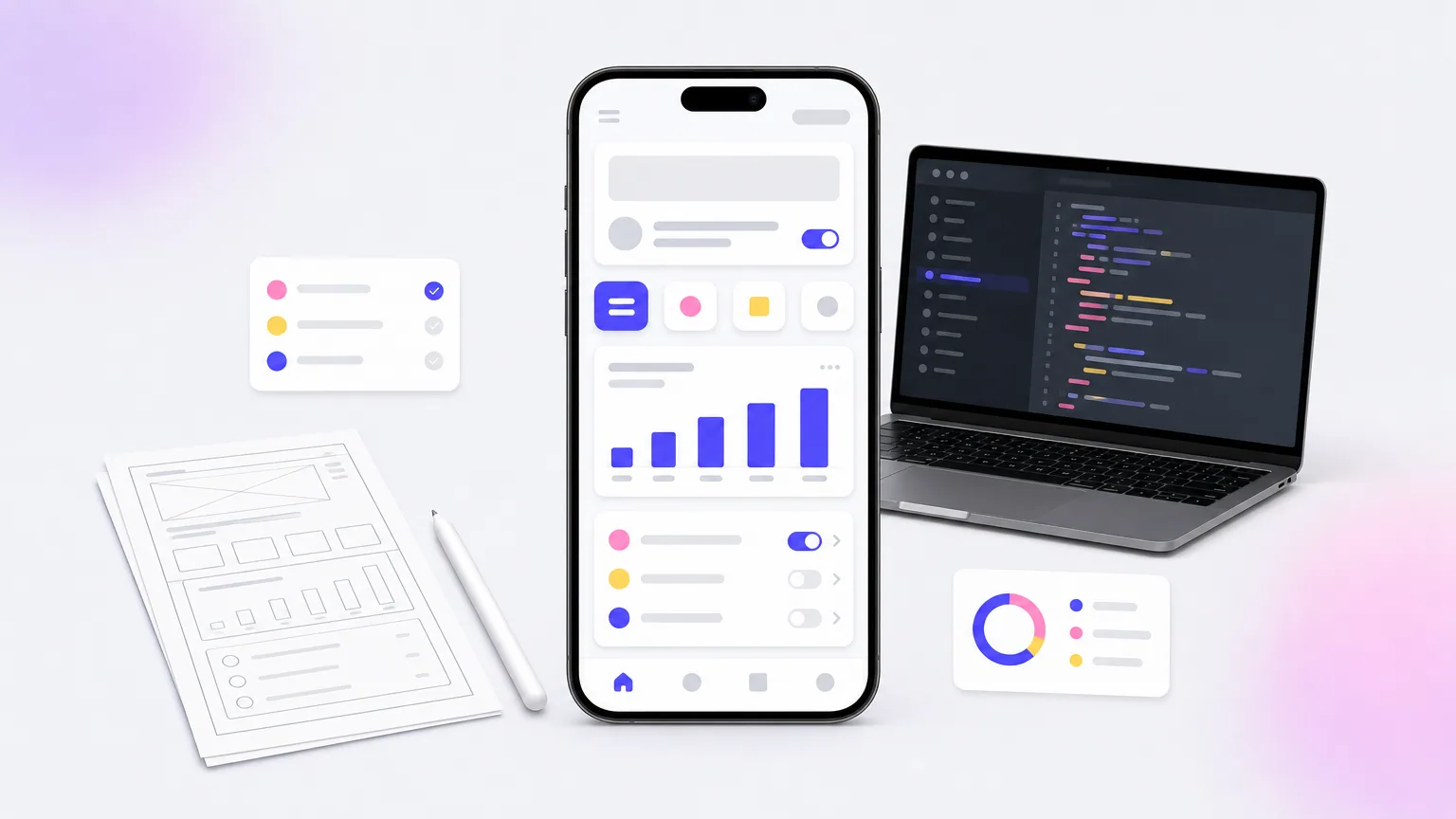
Arrowbin designs, builds, launches and maintains iOS and Android apps from one codebase, using React Native or Flutter. Strategy, design and engineering sit in one senior team, so nothing gets handed between agencies. A focused MVP runs through four stages:
- Discover (1 to 2 weeks): workshops, a prioritized scope and a fixed estimate.
- Design (2 to 3 weeks): UX flows, a UI system and a clickable prototype.
- Build (6 to 10 weeks): agile sprints with a working-software demo every Friday.
- Launch (a day to a week of store review): submission, review compliance and release management.
Along the way you get daily preview links and a written Friday update covering what shipped, what is next and what needs your approval. Store review checks your app against rules such as Apple's App Review Guidelines, which is why we handle submission and compliance end to end.
Ask every vendor for working software every week, because a status report proves nothing.
Who it suits
Arrowbin suits founders and growing businesses taking a first product to mobile, especially non-technical decision makers who want a predictable budget. We accept clients who only have a rough idea and work out the scope together. We serve clients worldwide, with overlapping working hours and async updates in English or Bengali.
Be realistic about our portfolio. It has seven live projects, mostly e-commerce and corporate sites for brands in Bangladesh. One of them, Maneel Club, has passed 10,000 orders since February 2026 through the store we rebuilt. A jewellery brand's Shopify store is being rebuilt on Next.js with Android and iOS apps. If you need a large enterprise program, one of the bigger firms below is a better match.
What to weigh
A polished MVP usually lands between $12,000 and $40,000, depending on features and integrations. You get a fixed, itemized estimate once the core feature set is defined. You own the source code, the App Store and Google Play developer accounts and all app data, so there is no vendor lock-in.
Cross-platform is the right default for most MVPs. An app that leans on heavy graphics or deep hardware access may deserve native code, so ask for that decision to be made during discovery. After launch, month-to-month maintenance plans run from 5 to 80+ developer hours, with critical response times from 4 hours down to 15 minutes.
2. TechAhead
What it builds
TechAhead has built mobile apps for enterprise clients since 2009. Its listed focus areas are enterprise mobile solutions, AI and machine learning, IoT integration, cross-platform work in React Native and Flutter, and HIPAA-aligned healthcare apps. It names Disney, Starbucks, ESPN and American Express among past partners and says it has 250+ mobile experts.
Who it suits
TechAhead fits enterprise leaders in healthcare, finance and retail whose apps must connect to existing systems and protect sensitive data. Its pitch centers on secure, compliant apps and AI features inside business workflows. If you are a regulated business with a long roadmap, it belongs on your shortlist.
The bigger the brand names on a portfolio, the more you need to ask which team actually built each app.
What to weigh
Its own guidance puts enterprise projects at $50,000 to $500,000+ and 3 to 9 months from concept to launch. That is priced for enterprise scope, so a small MVP budget will feel tight here. Ask who staffs your project, and ask for references from your own industry rather than from its best-known logos.
3. WillowTree
What it builds
WillowTree is a TELUS International company and describes itself as a digital product consultancy. It covers web and mobile app development, experience design, and data and AI transformation. Its team mixes strategists, designers and engineers, and it serves both consumer and enterprise clients.
Who it suits
Its experience centers on streaming platforms and major entertainment brands, plus AR, voice-enabled apps and connected device systems. That makes it a fit for consumer products at scale, where design and engagement lead the brief. It also helps enterprises modernize legacy systems, which suits companies with older software behind the new app.
What to weigh
A consultancy model means strategy and design are part of the engagement, which is valuable if you need them and expensive if you do not. Ask how much of the budget goes to engineering versus advisory work. Because it sits inside a larger corporate group, also ask how that affects team continuity and pricing structure, and who you will talk to week to week.
A consultancy earns its fee when the problem is unclear, and costs extra when you already know what to build.
4. Savvy Apps
What it builds
Savvy Apps was founded in 2009 and builds custom apps for startups, enterprises and government organizations. Its core approach is native development with Swift for iOS and Kotlin for Android. It also builds consumer apps and projects with strict security and compliance rules.
Who it suits
Its industry focus is media, entertainment, sports, healthcare and food services, with a people-first design philosophy. Savvy Apps fits teams that want a native-quality consumer app with careful user experience work. It also fits public-sector projects where security rules shape every decision.
What to weigh
Native development means two separate codebases, which raises cost and stretches the timeline compared with a single cross-platform build. That trade is worth it when performance or platform-specific features drive your product. If your app is mostly forms, lists and payments, you may be paying for capability you will not use, so ask for a native versus cross-platform recommendation in writing.
Choose native when the product needs it, not because it sounds more serious.
5. ArcTouch
What it builds
ArcTouch was founded in 2009 and builds custom mobile apps and connected experiences for enterprise clients. It covers native and cross-platform iOS and Android work. Its stated strength is connected devices, including Apple Watch, Android Wear and smart TV apps, along with IoT solutions and AI or machine learning inside mobile products.
Who it suits
ArcTouch fits products that live on more than a phone: a fitness app with a watch companion, a streaming app on TV, or a device that pairs with a mobile app. Its portfolio spans Fortune 500 companies, so it is geared toward established brands with budgets to match. If your roadmap includes hardware or multiple screens, its specialism is relevant.
What to weigh
For a plain phone-only app, that breadth may be more than you need. Ask for references from projects of your size and type, not only from its largest device work. Also ask how it scopes a phone-first launch that can add watch or TV support later, so you do not pay for those platforms on day one.
Specialists are worth a premium only when your product actually needs the specialty.
6. Rootstrap
What it builds
Rootstrap was founded in 2011 and is a digital product development company serving startups and enterprises. It builds custom mobile applications and has deep expertise in machine learning for data-driven apps. It also offers UX and UI design, cloud architecture and DevOps, so one vendor can cover the app and the infrastructure behind it.
Who it suits
Its team focuses on business apps in fintech, e-commerce and healthcare. Rootstrap fits products where intelligence is the feature, such as recommendations, risk scoring or personalization. It is also known for an agile methodology and security standards for enterprise-grade deployments, which helps if your buyers ask security questions.
What to weigh
Machine learning claims are easy to make and hard to verify. Ask for an example of a model running in production, what data it needed and how it is monitored. Find out whether your project would use its full stack or only mobile work, because bundled design, cloud and DevOps changes both the price and who you depend on after launch.
Ask any vendor that mentions AI to show you one model running in production.
7. Helpful Insight
What it builds
Helpful Insight has offices across the USA, UAE and India and has built custom digital products since 2016. Its services cover iOS, Android and cross-platform apps in Flutter and React Native, UI/UX design, QA testing, deployment and maintenance. It also offers staff augmentation and dedicated development teams.
Who it suits
Its project history spans healthcare, fintech, education, real estate, on-demand and e-commerce. It fits teams that want a dedicated developer pool they can scale up or down rather than a fixed-scope build. It states ISO 9001:2015 certification, a 5.0 Clutch rating and a 92% client retention rate.
What to weigh
Ratings and retention figures are self-reported, so check how many reviews sit behind that 5.0 and read a few in full. With offices on three continents, ask which office would staff your project and what the working-hour overlap would be. A dedicated-team model also puts more product management on your side, which suits teams that already have a product owner.
A perfect rating means little until you know how many reviews stand behind it.
What mobile app development services cost
Mobile app development services cost anywhere from about $10,000 for a basic app to $100,000 or more for advanced features and a custom backend, and published enterprise estimates run into the hundreds of thousands. The spread exists because scope, not the vendor's name, sets the price.
What published prices look like
Here are the ranges that companies and marketplaces publish, side by side with ours.
| Engagement | Published range |
|---|---|
| Freelance marketplace developer | $18 to $39 per hour |
| Agency developer, mixed locations | $25 to $60+ per hour |
| Experienced mobile app developer | $50 to $150+ per hour |
| Basic fixed-price app | From about $10,000 |
| Advanced features or custom backend | $100,000+ |
| Enterprise-grade build | $20,000 to $300,000 in one estimate, $50,000 to $500,000+ in another |
| Arrowbin polished cross-platform MVP | $12,000 to $40,000 |
The two enterprise estimates disagree at both ends, which tells you to treat any single number with caution. Only a scoped, written estimate from a vendor who has seen your feature list is worth comparing.
A worked example for a cross-platform MVP
Say two separate native builds would quote at $50,000 together. A cross-platform build saves roughly 30% to 40%, which brings the same app to $30,000 to $35,000. That is the logic behind building iOS and Android from one codebase in React Native or Flutter.
Timeline follows the same logic. Scoping (1 to 2 weeks), design (2 to 3 weeks) and development with testing (6 to 10 weeks) add up to 9 to 15 weeks. Store review adds up to a week, so a focused MVP reaches the stores in 10 to 16 weeks.
Compare quotes on scope and timeline together, because a cheap quote with a vague scope is just a delayed invoice.
What moves the price
Five things shift a quote more than anything else:
- Feature depth: real-time sync, AI personalization and complex workflows take far more engineering hours than standard screens.
- Platform choice: two native apps cost more than one cross-platform codebase.
- Integrations: payment gateways, third-party APIs and legacy systems add scope.
- Compliance: healthcare and fintech apps need extra work for standards such as HIPAA.
- Engagement model: a fixed-scope build, a dedicated team and ongoing support are all priced differently.
How to choose a mobile app development company
Choose the company that can show shipped work like yours, name the people who will build it, and put scope, price and ownership in writing. Everything else is secondary to those four things.
Five checks before you shortlist
Run every candidate through the same filter:
- Relevant shipped work: apps with similar users, integrations or compliance needs, not just impressive logos.
- A named team: the engineers and designers who will work on your project, and whether you can talk to them directly.
- A visible process: regular demos, defined milestones and a clear way to approve changes.
- Security and compliance: encryption, secure APIs and proof of experience with the regulations your industry follows.
- Support and ownership: post-launch maintenance terms, plus who owns the source code and the store accounts.
Verify reviews on independent platforms rather than on the vendor's own page, and ask for two client references you can call. A company that hesitates on either is telling you something.
US-based team or offshore team
US mobile app development companies offer real-time collaboration, simpler communication and closer alignment with US compliance expectations, usually at higher hourly rates. Offshore teams offer lower rates and a wider talent pool, but time zone gaps need structured processes to manage.
The map pin matters less than the working rhythm. Look for agreed overlap hours, a weekly written update and a demo cadence. When those are fixed at kick-off, distance stops being the main risk, and a vague process stays risky wherever the team sits.
Picking the right app partner
The right mobile app development company depends on your project, not on a ranking. Enterprises with compliance demands lean toward the larger names above. Teams that need wearables, streaming or machine learning should pick the specialist. Founders taking a first product to mobile usually get more from a senior team that scopes tightly, shows working software weekly and hands over everything it builds.
Whichever you shortlist, send each company the same brief and compare the answers on scope, timeline, price and ownership. If a fixed estimate and a first release in 10 to 16 weeks sounds like what you need, you can book a free 30-minute call with Arrowbin and get a straight answer on scope, timeline and cost from a senior engineer.