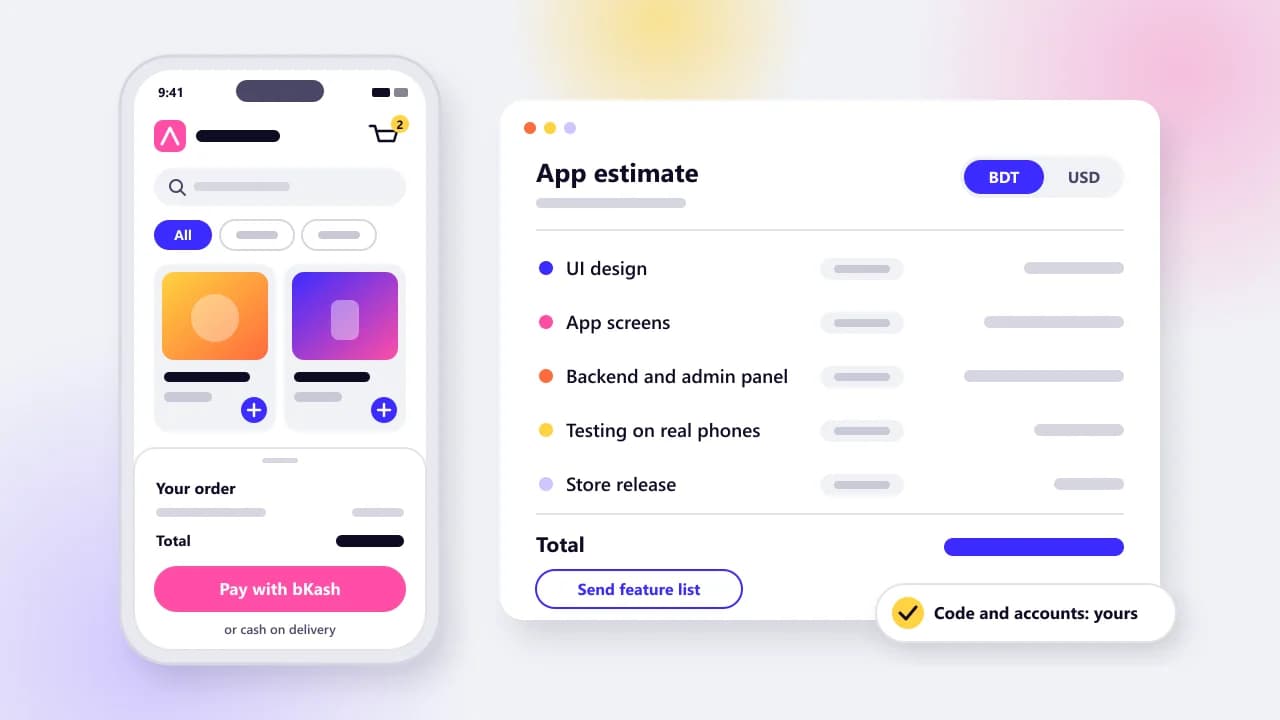
The short answer
To choose the right software development company, weight proven track record, communication and process far above price. Shortlist three to five firms, review live work, ask who builds your project and who owns the code, and watch for red flags such as suspiciously low quotes and vague timelines.
On this page
Your software is too important to hand to the wrong team. The right development partner gives you a product that moves the business forward; the wrong one can cost you months and a chunk of your budget before you even realize it. This guide lays out a practical framework: the criteria that actually matter, the questions to ask, the red flags to avoid, and a simple way to make the final call.
It's written for founders, product owners and business leaders who are about to spend real money and can't afford to get this wrong. The advice here reflects how we run our own selection and onboarding at Arrowbin, not a generic checklist. Let's start with the decision itself.
How do you choose the right software development company?
Choose a software development company on proof, not promises. Review live products they've shipped, talk to past clients, confirm who will actually work on your project, and check how they communicate and test. Shortlist three to five firms, score them against consistent criteria, and pick the one that pairs genuine technical depth with clear communication and a real process. Price comes last.
That's the short version. The rest of this guide breaks each part down so you can run the process yourself, starting with what 'good' actually looks like.
What should you look for in a development partner?
A strong partner is more than a group of capable coders. The firms that consistently deliver share a handful of qualities, and weighting them correctly is the difference between a smooth build and an expensive lesson.
Proven, verifiable track record
Look for shipped products you can open and use, ideally in or near your industry. Live work tells you far more than a deck full of logos. Ask which parts they actually built and what problems they solved.
Clear, proactive communication
You'll spend months working with this team. Watch how they communicate during the sales process. How clear and honest they are now, and how fast they reply, is the best predictor of how the project itself will go.
Genuine technical depth and a real process
Ask about their approach to architecture, testing, code reviews and deployment, and who looks after hosting and DevOps once the product is live. A serious team has opinions and a repeatable process. A risky one improvises. Technical skill is table stakes. Process is what makes it reliable.
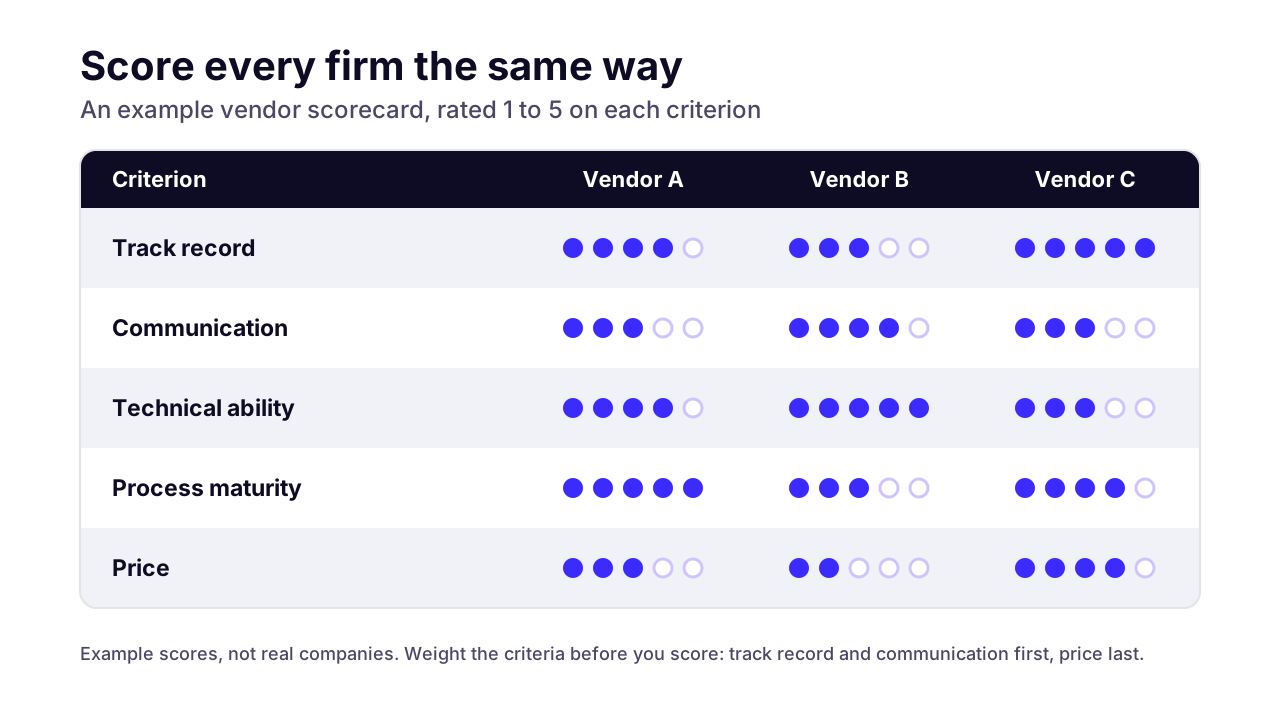
Put these together and price should be one of the smaller factors in your decision. Here is roughly how we'd weight the criteria:
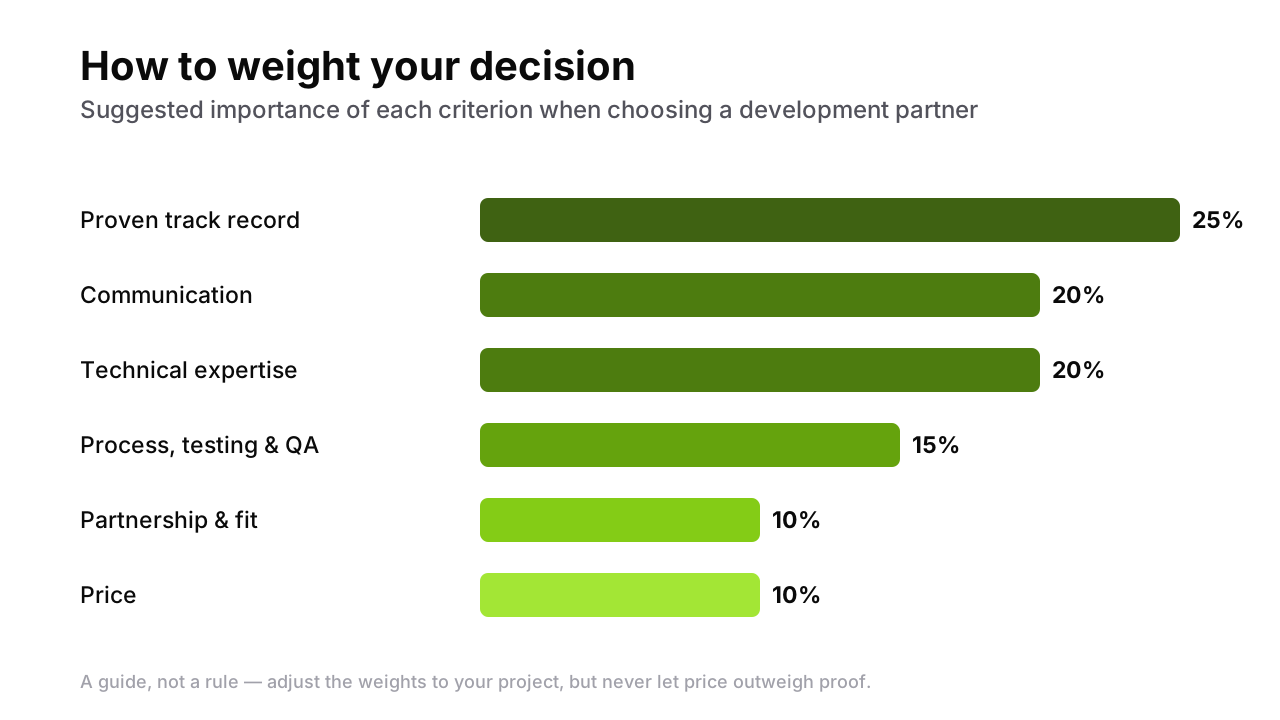 (opens the full-size chart in a new tab)
What questions should you ask before hiring?
The right questions surface how a company really works. Ask every shortlisted firm the same set so you can compare answers directly:
- Can I see and use products you've built, ideally live and in production?
- Who exactly will work on my project, and how senior are they?
- How do you communicate progress, and how often will I hear from you?
- What is your process for testing, code review and security?
- Do I own the source code, accounts and infrastructure?
- What happens after launch? Do you offer maintenance and support?
- How do you handle scope changes and disagreements?
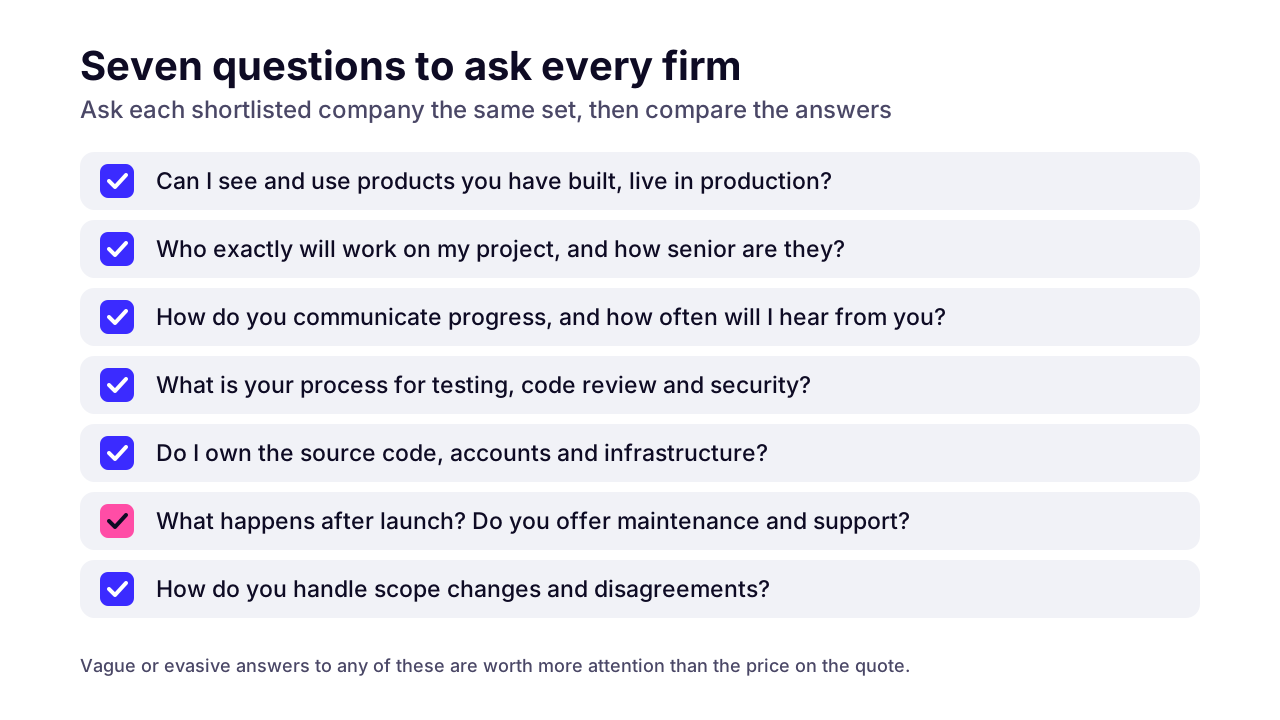 (opens the full-size chart in a new tab)
Listen closely to the answer about life after launch. Software needs ongoing maintenance and support: security patches, dependency updates and someone to call when something breaks. A partner with no plan for that is handing you a future problem. Ask what the plan costs, too: our guide to what a fair maintenance plan should cost gives you a number to hold their quote against.
If the project is a prototype someone built with AI tools, add one question: how will you audit it before changing anything? Our production checklist for vibe-coded apps covers what that audit should look for.
How do you evaluate a company's portfolio and track record?
A portfolio is only useful if you interrogate it. Don't just look at the screenshots. Open the live products, test them on your phone, and ask pointed questions about each one.
- Is the work live and usable, or just mockups and concept art?
- Did they build it end-to-end, or only a small slice?
- Is any of it similar in complexity or industry to your project?
- Will they connect you with the client to ask how it went?
- Are the products fast, polished and still maintained?
A reference call is worth more than any case study. Ask past clients what surprised them, how the team handled problems, and whether they'd hire them again. Honest answers to those three questions tell you most of what you need to know.

Agency vs freelancer vs in-house: which is right for you?
There are three common ways to build software, and the right choice depends on your scope and budget, and on how central software is to your business.
Best for
- Freelancer
- Small, defined tasks
- Agency
- End-to-end products
- In-house team
- Long-term ownership
Team breadth
- Freelancer
- One skill set
- Agency
- Design, dev, QA, PM
- In-house team
- Whatever you hire
Cost
- Freelancer
- Lowest hourly
- Agency
- Mid; a full team
- In-house team
- Highest (salaries + overhead)
Speed to start
- Freelancer
- Fast
- Agency
- Fast
- In-house team
- Slow (hiring takes months)
Continuity risk
- Freelancer
- High (single person)
- Agency
- Low (team covers)
- In-house team
- Low once built
Ideal when
- Freelancer
- Budget tight, scope small
- Agency
- You need a product shipped
- In-house team
- Software is your core
For most businesses building their first serious product, an agency is usually the best fit: a full team and a repeatable process without the cost and delay of hiring. This is the usual route for custom software where you need UI/UX design, engineering and QA under one roof. Freelancers suit small, well-defined tasks. An in-house team makes sense once software becomes your core, ongoing advantage.
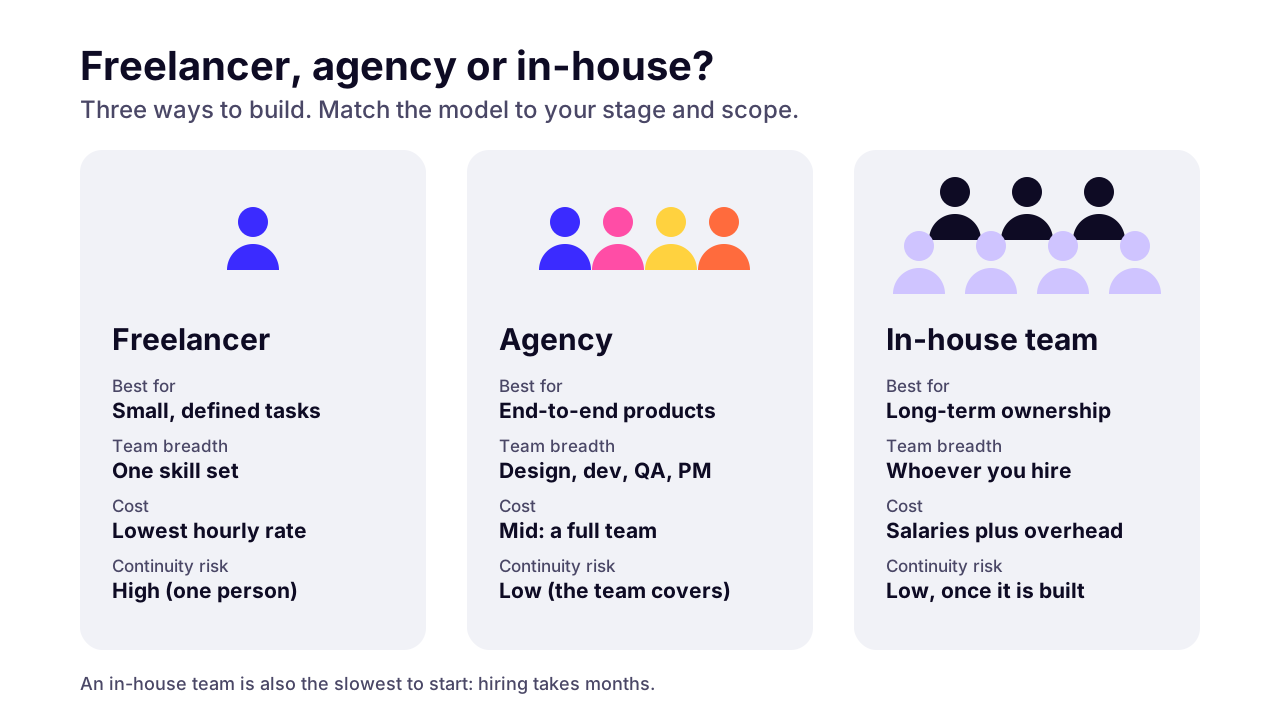 (opens the full-size chart in a new tab)
What are the biggest red flags to avoid?
Some warning signs reliably predict a painful project. If you see these, slow down. No portfolio is worth a partner you can't trust.
- A quote that seems too good to be true. It usually leaves out design, QA or discovery.
- Vague timelines, no clear process, and hand-wavy answers about how they work.
- Reluctance to share references or let you use their live work.
- No mention of testing, security or maintenance.
- They won't confirm you'll own the code and infrastructure.
- Slow, unclear communication during the sales process. It only gets worse after you sign.
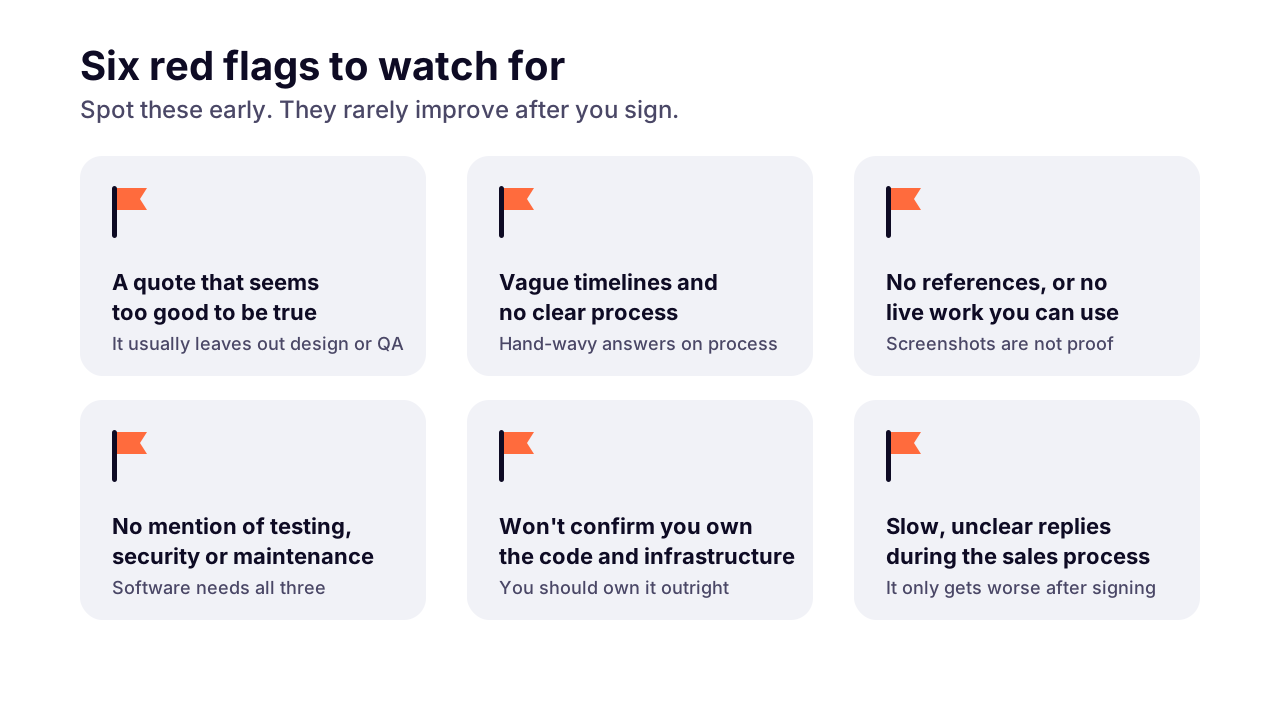 (opens the full-size chart in a new tab)
"Poor communication during the sales process is the single most reliable predictor of a difficult project. It rarely improves once the contract is signed, and the small frustrations tend to pile up over the months that follow."Md. Shishir Ahmed, Founder at Arrowbin
How should you compare quotes and contracts?
The cheapest quote is rarely the cheapest project. When you compare proposals, compare what's actually included, not just the number at the bottom.
What's included (discovery, design, QA)
- Why it matters
- Cheap quotes often omit the phases that prevent costly rework
Fixed price vs time & materials
- Why it matters
- Match the model to how well-defined your scope is
Who owns the code and IP
- Why it matters
- You should own your source code and infrastructure outright
Post-launch support terms
- Why it matters
- Software needs maintenance, so know the cost before you sign
Who actually builds it
- Why it matters
- Senior teams ship cleaner code, lowering total cost
If you want the full picture on pricing, our guide on what custom software costs breaks down the ranges, regional rates and hidden costs in detail. Use it alongside this one when you compare proposals.
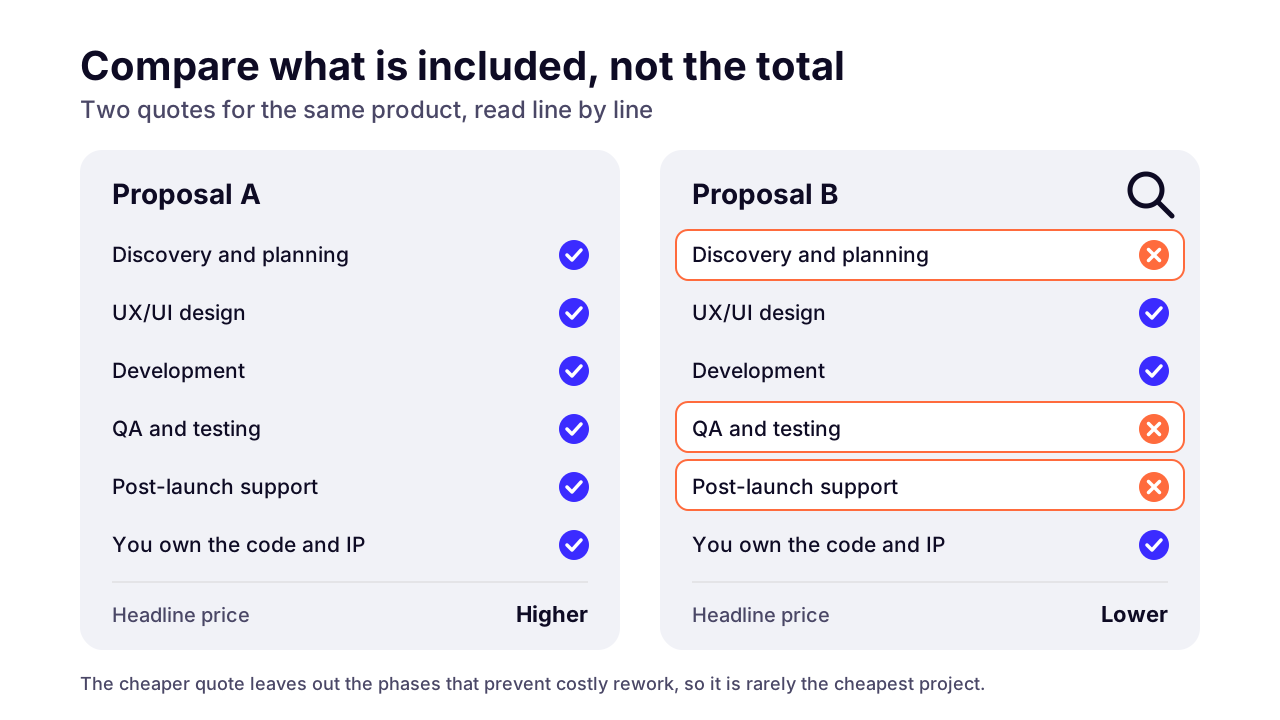 (opens the full-size chart in a new tab)
Why communication and process matter more than you think
In our experience, most software projects that go wrong don't come undone over technical choices. They come undone over communication. Missed expectations, slow responses and unclear scope cause far more damage than a suboptimal framework choice. A partner who sends a weekly demo, flags risks early and pushes back when you're about to make a costly mistake is worth more than one who just says yes to everything.
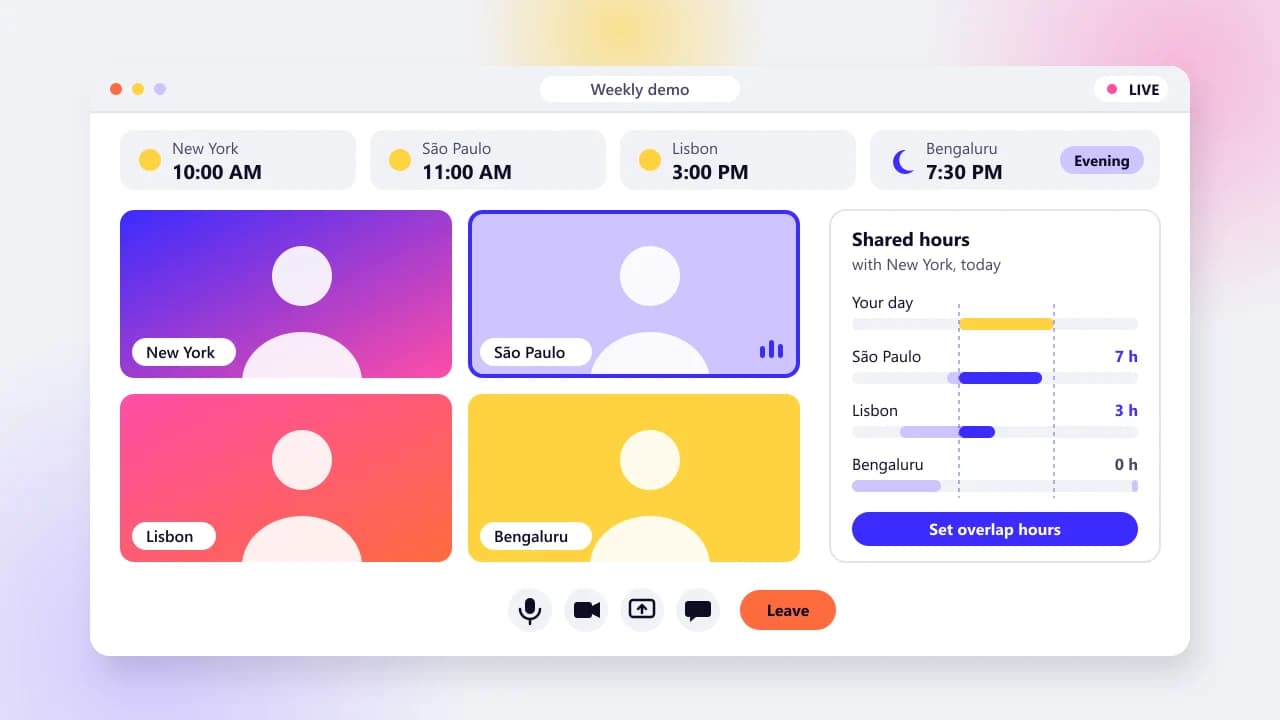
Ask how often you'll see working software, who your point of contact is, and how they handle disagreements. A clear, repeatable process is the strongest signal that a team can be trusted with your budget and timeline. If the team works in another time zone, check how many working hours you'd actually share before you sign.
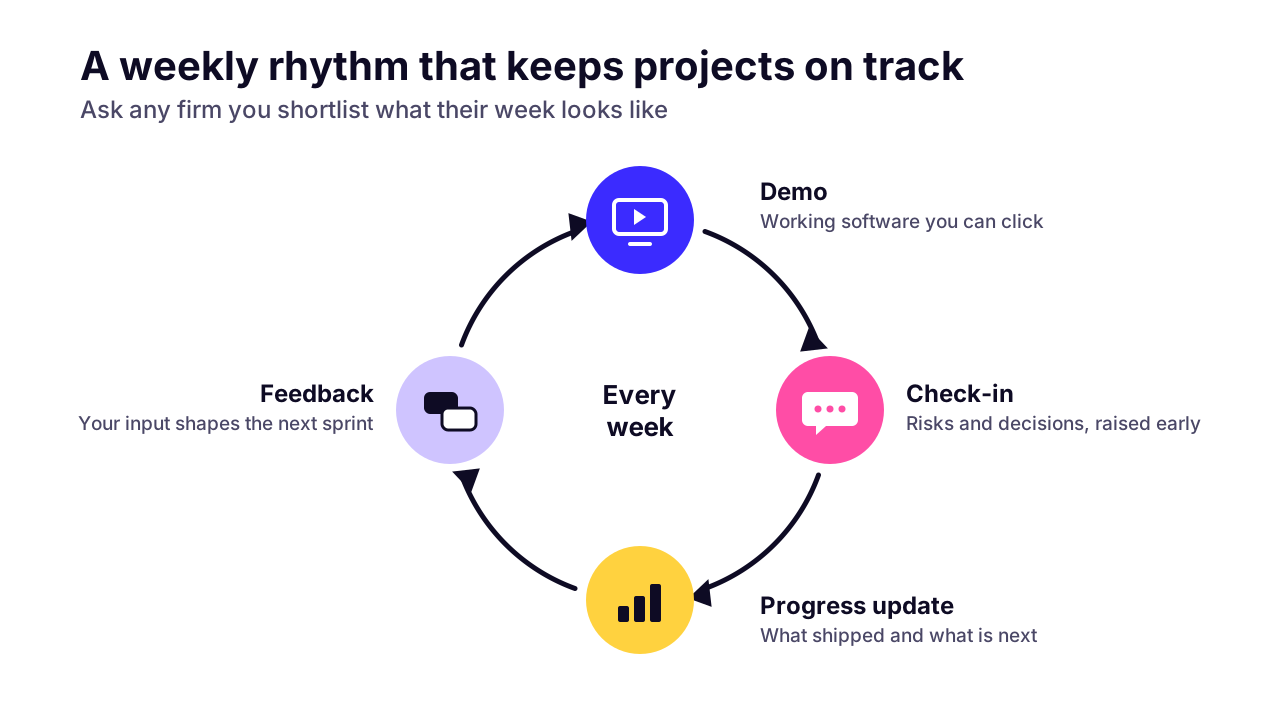 (opens the full-size chart in a new tab)
A simple framework to make the final decision
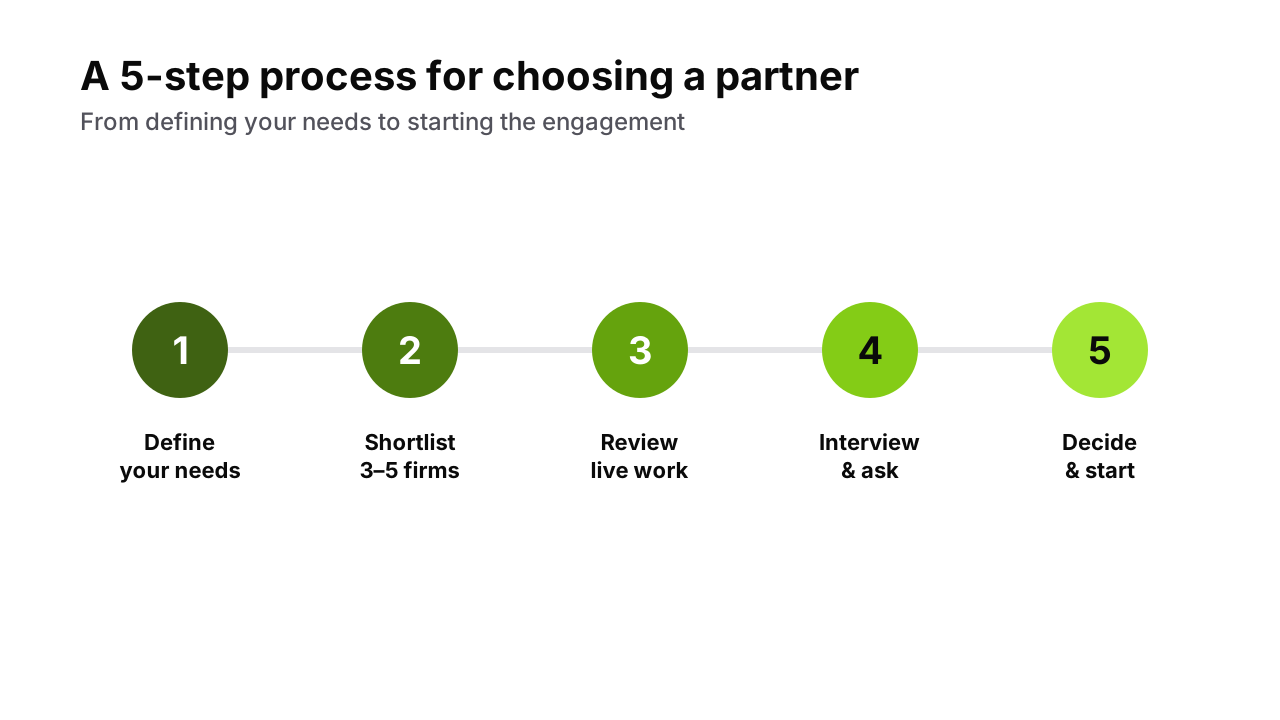
Once you've gathered the information, the decision itself is straightforward. Run every candidate through the same five steps so you're comparing like for like.
 (opens the full-size chart in a new tab)
- Define your needs: goals, must-have features, budget range and a realistic launch timeline.
- Shortlist three to five firms whose live work and focus fit your project.
- Review their products and talk to past clients about real outcomes.
- Interview each team with the same questions and score the answers.
- Decide on overall fit. Proof, communication and process come first, price last.
 (opens the full-size chart in a new tab)
Making the call
Choosing a development partner is one of the biggest calls your project will face. Get it right and you gain a team that ships and stays invested in your success. Anchor your decision in the work they've shipped, the way they communicate and the process they follow, treat price as a tiebreaker rather than the headline, and pay attention to how a team behaves before you sign. That behavior is exactly what you'll live with afterward.
At Arrowbin, we welcome every one of the questions above. You can inspect the products we've shipped, talk to our clients, and you always own your code. If you'd like to see whether we're the right fit, book a free 30-minute call and we'll talk through your project honestly, with no pressure.

Key takeaways
- 01Weight proven track record, communication, technical depth and process above price.
- 02Shortlist 3–5 firms and review live products you can actually open and use.
- 03Ask every firm the same questions, especially who builds it and who owns the code.
- 04Choose an agency for end-to-end products, freelancers for small tasks, in-house when software is your core.
- 05Treat too-good-to-be-true quotes, vague timelines and weak communication as red flags.
- 06Score candidates against consistent criteria and decide on overall fit, not the lowest number.

Written by
Md. Shishir Ahmed
Founder, Arrowbin
Founder of Arrowbin. Writes about shipping software, what it costs, and the decisions that decide whether a product works.