The short answer
Custom software development usually costs $5,000 to $250,000+ in 2026, and most business products land between $30,000 and $120,000. The number tracks your scope, the technical complexity, the depth of design, the platforms you ship on, and how senior your team is and where they sit. To keep it under control, start with a tightly scoped MVP and lock in a fixed estimate after discovery.
On this page
If you're planning a custom software project, the first question on your mind is almost certainly how much it will cost. It's also the hardest question to answer in a single number. Custom software is built around your own workflows and users, so the price moves with what you actually need. This guide is for founders, product owners and operations leaders who want a realistic budget before they talk to a single agency. We build custom software for a living, and the numbers below are our best estimate of 2026 market pricing, not a sales pitch. If you're still deciding whether to build at all, start with our comparison of custom software and off-the-shelf tools.
The ranges in this guide are Arrowbin estimates, drawn from our own scoping and quoting work and checked against public developer salary data. They're planning figures, not quotes. We'll cover price ranges by project type, what you're actually paying for, the factors that move the number most, how regional rates change the math, the costs nobody mentions up front, and a worked example of a typical $60,000 build. By the end you should be able to budget with confidence and spot a bad quote quickly.
How much does custom software development cost in 2026?
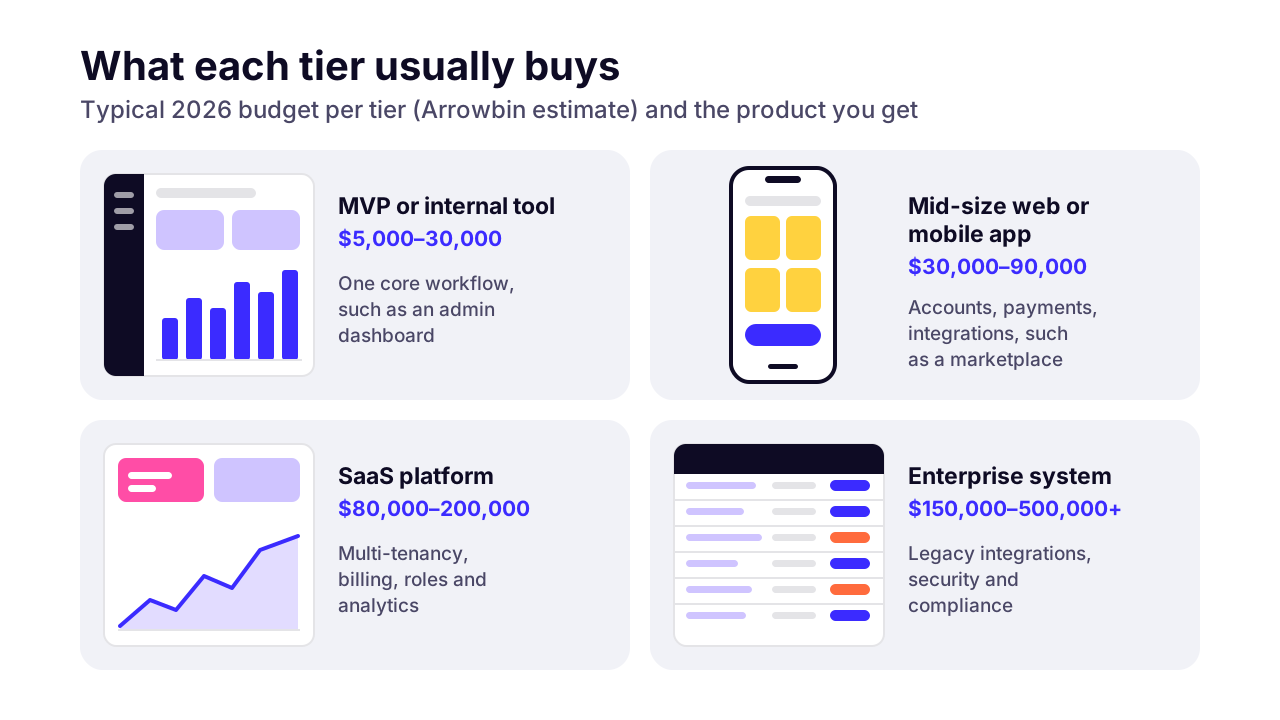
Custom software development costs between $5,000 and $250,000 or more in 2026. A simple internal tool or a lean MVP usually falls in the $5,000–$30,000 band. A mid-size web or mobile app lands around $30,000–$90,000. A full SaaS platform runs $80,000–$200,000, and enterprise-grade systems start at $150,000 and climb from there. Most funded startups and established businesses end up spending between $40,000 and $120,000 on their first serious product.
Internal tool / simple MVP
- Typical cost (2026)
- $5,000 – $30,000
- Timeline
- 4–10 weeks
- Example
- Booking tool, admin dashboard
Mid-size web or mobile app
- Typical cost (2026)
- $30,000 – $90,000
- Timeline
- 3–6 months
- Example
- Marketplace, customer portal
Full SaaS platform
- Typical cost (2026)
- $80,000 – $200,000
- Timeline
- 5–9 months
- Example
- Multi-tenant B2B product
Enterprise system
- Typical cost (2026)
- $150,000 – $500,000+
- Timeline
- 9–18 months
- Example
- ERP, logistics platform
These figures are Arrowbin estimates, so treat them as planning ranges, not quotes. The same feature list can cost twice as much with one team as another, depending on complexity, design and who's doing the work. The rest of this guide explains why, so you can place your own project on this map.
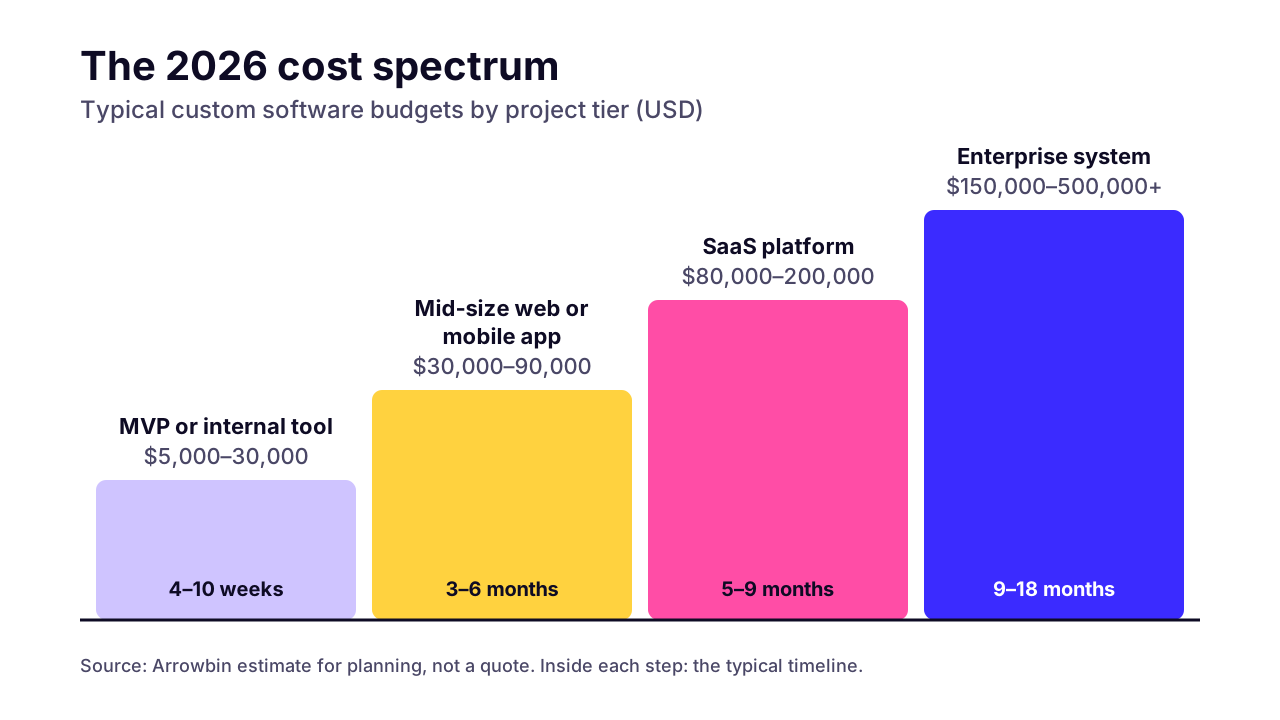 (opens the full-size chart in a new tab)
What is actually included in a software development cost?
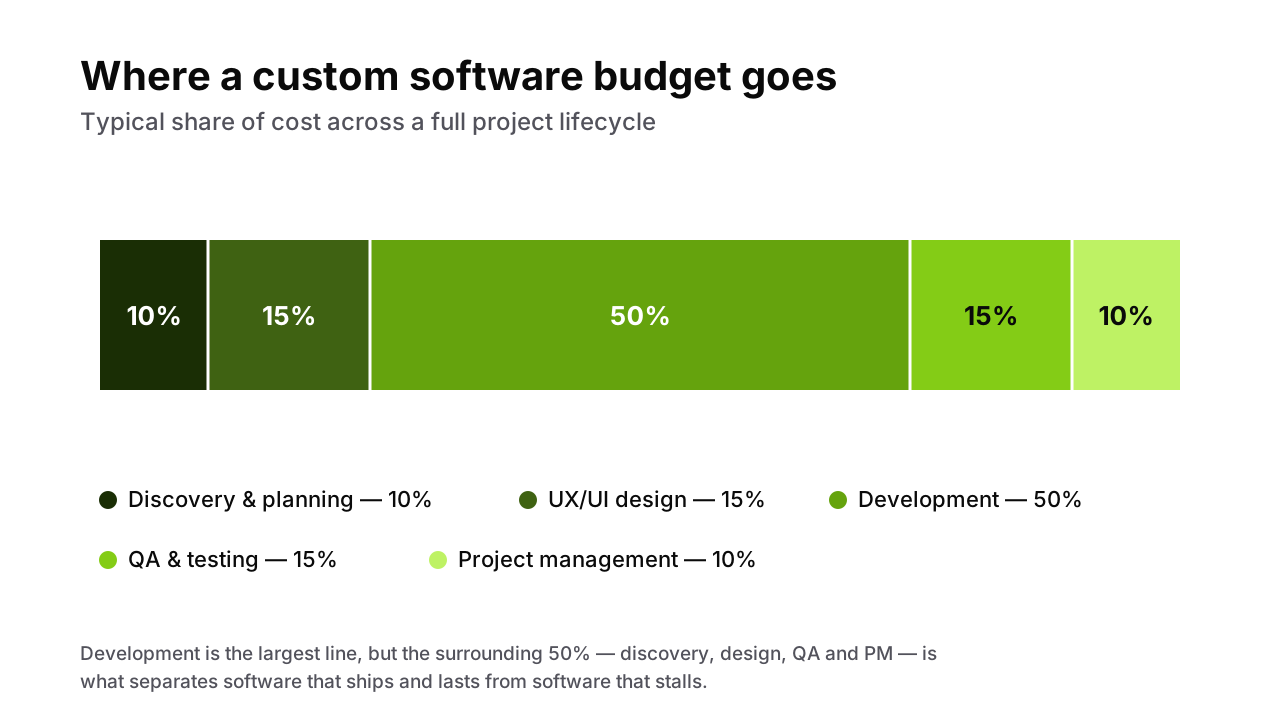
When you pay for custom software, you're paying for more than code. A credible quote covers the whole lifecycle: discovery and planning, UX/UI design, engineering, quality assurance, and project management. Writing code is only about half the work. The other half is figuring out the right thing to build and making sure it actually works.
 (opens the full-size chart in a new tab)
Here is what each phase buys you, and why skipping any of them tends to cost more later:
- Discovery and planning (~10%): requirements, user flows, technical architecture and a clear scope. This is where rework gets prevented.
- UX/UI design (~15%): wireframes, a design system and polished screens that make the product usable and trustworthy.
- Development (~50%): front-end, back-end, integrations, infrastructure and the actual feature build.
- QA and testing (~15%): manual and automated testing so the product holds up across devices, edge cases and load.
- Project management (~10%): coordination, communication and keeping scope, budget and timeline on track.
If a quote is dramatically cheaper than the rest, ask which of these phases has been cut. Usually it's discovery, QA or design, and those are exactly the phases that protect you from an expensive rebuild six months later.
What factors affect custom software development costs the most?
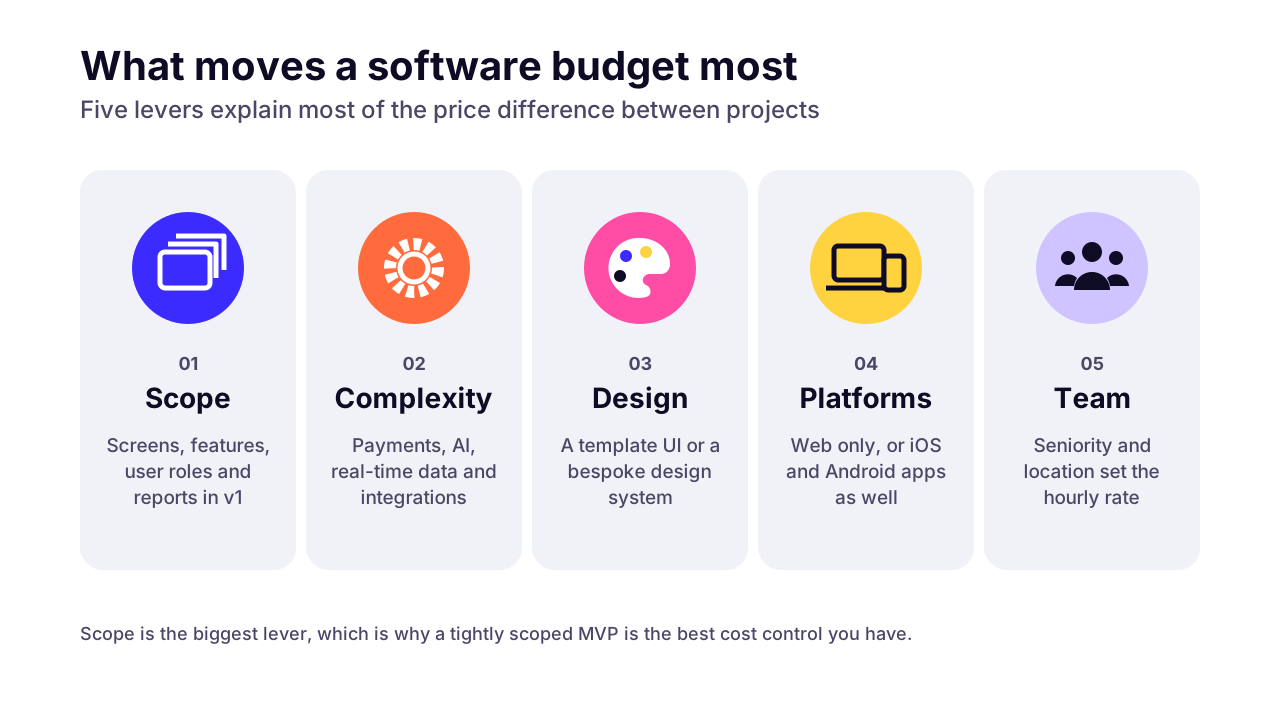
A handful of factors explain most of the price difference between projects. Understand them and you can steer the budget instead of just reacting to a quote.
1. Scope: how much you are building
Scope is the single biggest driver. Every screen, feature, user role and report adds design, build and testing time. A product with 5 core features will always cost a fraction of one with 25. That's why a focused MVP is the best cost-control tool you have.
2. Technical complexity
Not all features are equal. A static content page is cheap. Real-time data, payments, AI features, third-party integrations, complex permissions and high-scale infrastructure are expensive, because they take more engineering and far more testing. Two products with the same screen count can differ wildly in cost based on what happens under the hood. If the AI part is an agent that works inside your systems, our guide to AI agent costs for small businesses breaks that bill down.
3. Design depth
A templated, off-the-shelf UI is fast and cheap. Bespoke, brand-aligned UI/UX design, with custom interactions, animation and a full design system, costs more, but for customer-facing products it often pays for itself in conversion and retention.
4. Platforms and devices
A web-only product is the cheapest path. Adding native iOS and Android apps can increase cost significantly because each platform needs its own build and testing. Cross-platform frameworks reduce this, but multi-platform is still more than single-platform.
5. Team seniority and location
A senior team charges more per hour but often costs less overall. They make better architectural decisions, write cleaner code and ship with fewer defects. Location matters too. A developer in San Francisco and one in Dhaka with identical skills can have a 4–5x difference in rate (Arrowbin estimate).
 (opens the full-size chart in a new tab)
How much does each type of software project cost?
Costs get much more concrete once you anchor them to a project type. Here is what each tier typically buys in 2026.
MVP or internal tool: $5,000 to $30,000
A minimum viable product or a focused internal tool covers one core workflow done well. Think an admin dashboard, a booking system or a simple two-sided app with a handful of screens. The goal is to validate value or remove a manual bottleneck quickly, then expand based on real usage. For the schedule side of that decision, see our guide on how long it takes to build an MVP, and for the budget, our guide to MVP development cost works through the sums.
Mid-size web or mobile app: $30,000 to $90,000
This is where most businesses end up: a polished product with user accounts, a real database, several integrations, payments and a considered design. A customer portal, an online store or marketplace, or a content platform usually lands here. If it's a store, weigh Shopify against a custom store before you budget for a build at all.
SaaS platform: $80,000 to $200,000
A full software-as-a-service product adds multi-tenancy, subscription billing, role-based permissions, analytics, admin tooling and the reliability customers expect from something they pay for monthly. The higher cost reflects the surrounding engineering, not just more screens. Our guide to what a SaaS costs to build and run breaks that work down, monthly running costs included.
Mobile apps and enterprise systems: $50,000 to $500,000+
Native mobile apps add per-platform build and review overhead. Enterprise systems such as ERPs, logistics platforms, and regulated healthcare or fintech products carry the highest cost. They have to integrate with legacy systems, meet security and compliance requirements, and cover a much wider set of functionality.
 (opens the full-size chart in a new tab)
How does developer location and seniority affect price?
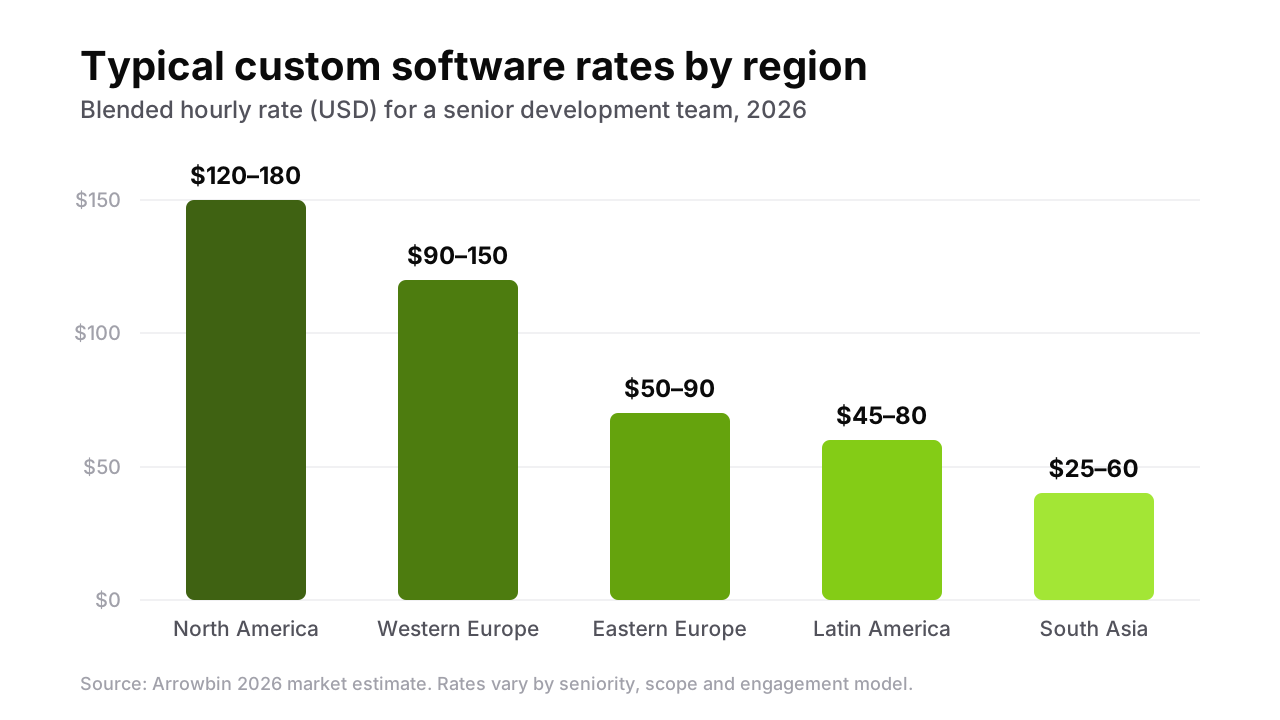
Location is one of the biggest hidden variables in any quote. The same product can cost three to five times more depending on where your team sits, because hourly rates vary enormously by region. Here is our 2026 estimate for a senior development team. These are Arrowbin estimates of blended agency rates, not published survey figures, so use them to compare regions rather than to price a specific quote. For the sourced pay figures underneath them, see our developer salaries by country data.
 (opens the full-size chart in a new tab)
North America
- Typical 2026 hourly rate (Arrowbin estimate)
- $120–180
Western Europe
- Typical 2026 hourly rate (Arrowbin estimate)
- $90–150
Eastern Europe
- Typical 2026 hourly rate (Arrowbin estimate)
- $50–90
Latin America
- Typical 2026 hourly rate (Arrowbin estimate)
- $45–80
South Asia
- Typical 2026 hourly rate (Arrowbin estimate)
- $25–60
It's tempting to chase the lowest rate. But rate and total cost aren't the same thing. A cheap team that needs three attempts to get something right ends up more expensive than a strong team that gets it right once. The best value is usually a senior team in a lower-cost region: strong engineering at a sustainable rate, with enough time-zone overlap for real collaboration. If you are weighing how to evaluate a senior team rather than just a rate card, that comes down to proof and process more than geography.
If you're weighing a team in Bangladesh, our guide to what an app costs to build in Bangladesh puts local price lists in Taka and dollars.
"The cheapest quote is rarely the cheapest project. Rework, missed requirements and fragile code cost far more than getting it right the first time."Md. Shishir Ahmed, Founder at Arrowbin
Fixed price vs time & materials: which costs less?
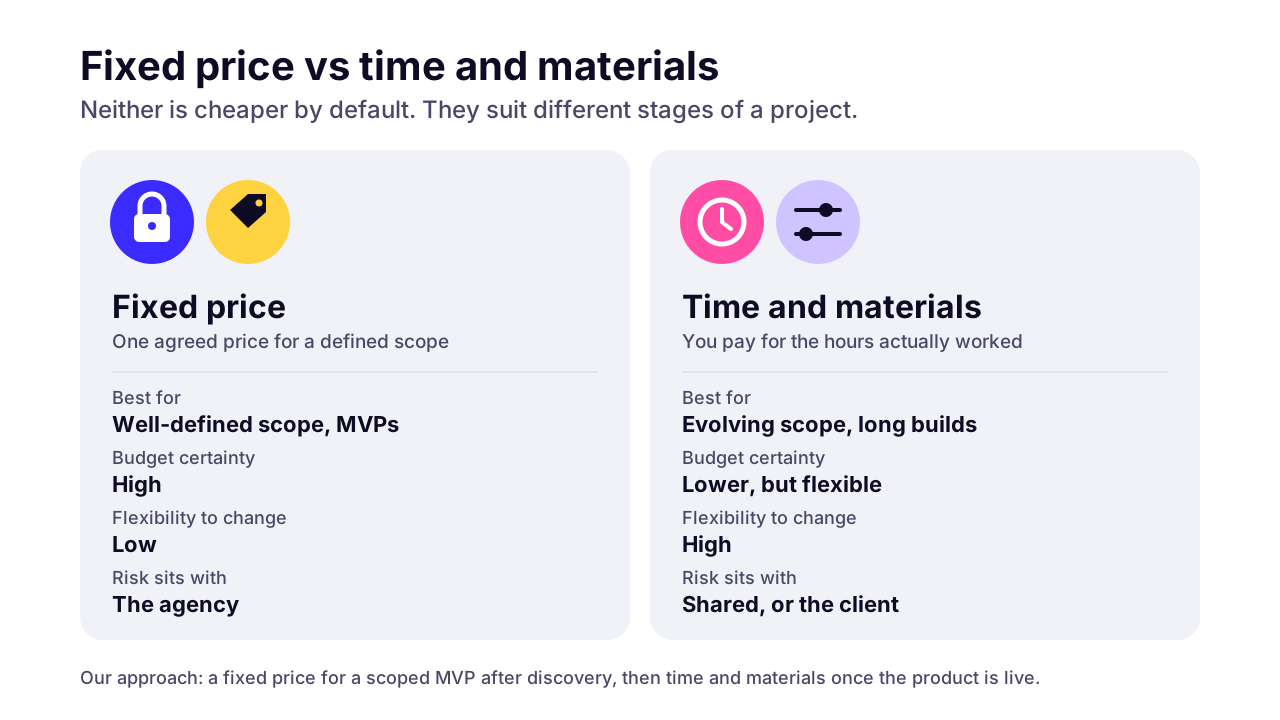
How you're billed matters almost as much as the rate. The two common models are fixed-price (one agreed number for a defined scope) and time & materials (you pay for the hours actually worked). Neither is universally cheaper. They suit different situations.
Best for
- Fixed price
- Well-defined scope, MVPs
- Time & materials
- Evolving scope, long builds
Budget certainty
- Fixed price
- High
- Time & materials
- Lower, but flexible
Flexibility to change
- Fixed price
- Low
- Time & materials
- High
Risk sits with
- Fixed price
- The agency
- Time & materials
- Shared / the client
Typical use
- Fixed price
- Phase 1 / discovery output
- Time & materials
- Ongoing product development
Our recommendation: run a short, paid discovery phase first, then take a fixed price for a clearly scoped MVP so you have budget certainty for the launch. Once the product is live and evolving, switch to time & materials so you can adapt quickly to what real users tell you.
 (opens the full-size chart in a new tab)
What hidden costs should you budget for?
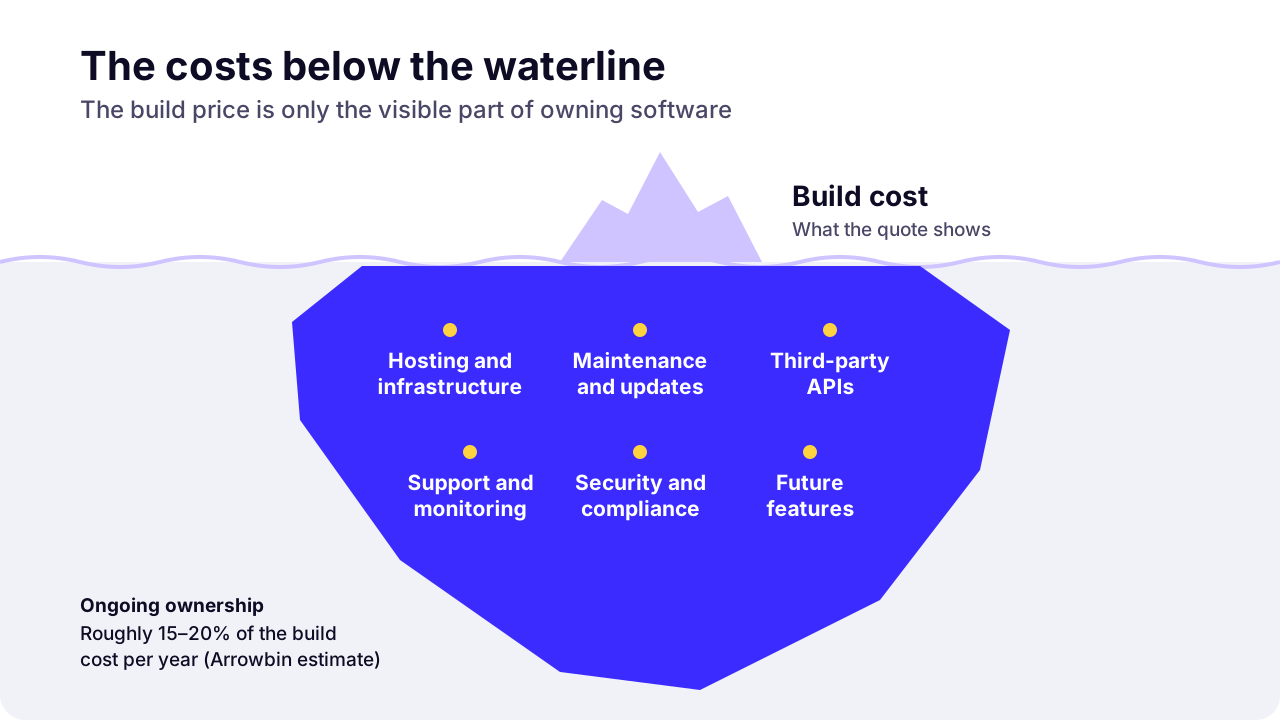
The build price isn't the whole story. Software keeps running after launch, and a realistic budget accounts for the costs that arrive once development ends (and sometimes while it's still going). As a planning rule of thumb (an Arrowbin estimate, not an industry statistic), set aside roughly 15–20% of your build cost per year for ongoing ownership. Our guide to what software maintenance costs per year explains what that money buys and when it runs higher.
- Hosting and infrastructure: cloud servers, databases and bandwidth that scale with usage.
- Third-party services: payment processors, email, SMS, maps and other APIs that charge per use.
- Maintenance and updates: bug fixes, security patches, and keeping libraries current.
- Support and monitoring: uptime monitoring, error tracking and responding to issues.
- Future features: the roadmap you'll inevitably want once real users arrive. Budget these separately; the 15–20% covers small improvements, not a new roadmap.
- Compliance and security: audits, certifications and data protection for regulated industries.
 (opens the full-size chart in a new tab)
How can you reduce software costs without sacrificing quality?
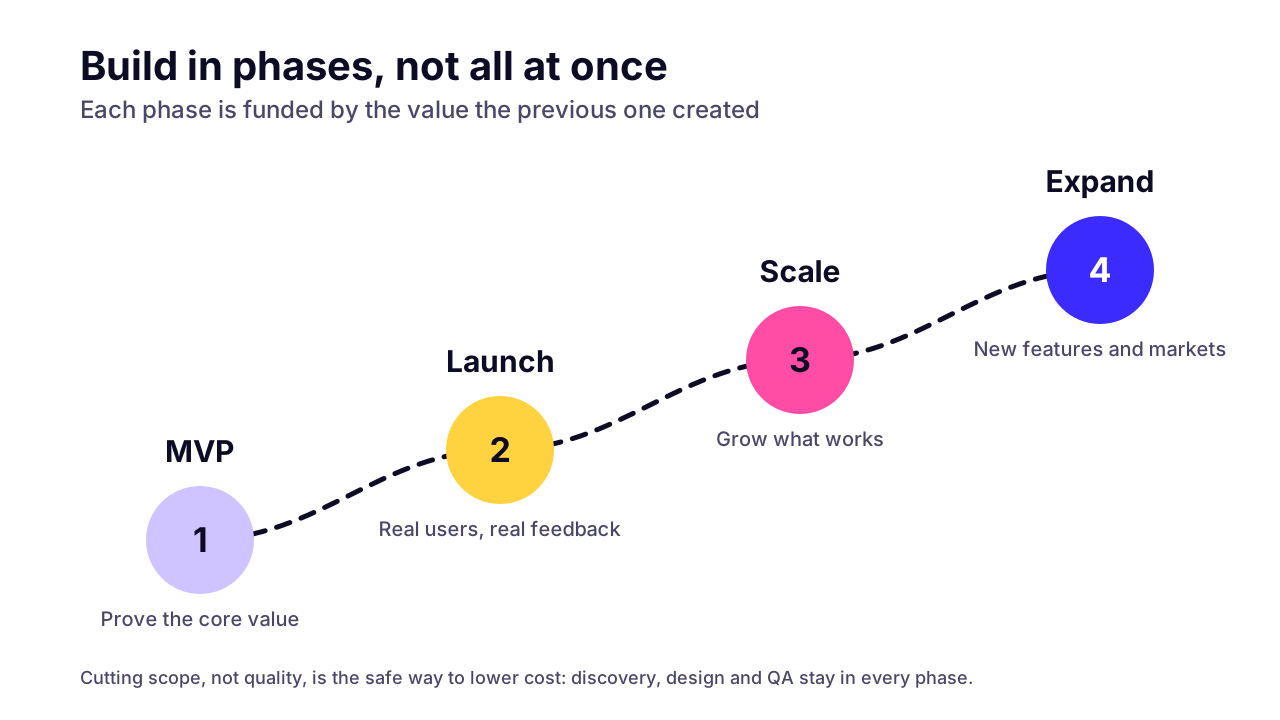
There's a right way and a wrong way to cut a software budget. The wrong way is skipping QA, design or discovery, which just defers cost into expensive rework. The right way is to build less, and to build it in the right order.
- Start with an MVP: build the smallest version that proves value, then expand using revenue and feedback.
- Prioritize hard. Cut every feature that is not essential to your core workflow. You can always add it later.
- Reuse instead of rebuilding. Lean on proven frameworks, design systems and third-party services rather than building everything from scratch.
- Invest in discovery. A few thousand dollars of planning routinely saves tens of thousands in rework.
- Choose a senior team. They ship cleaner code faster, which lowers total cost even at a higher hourly rate.
- Phase the build, and fund each stage with the value the previous stage created.
 (opens the full-size chart in a new tab)
Worked example: what a typical $60,000 SaaS MVP looks like
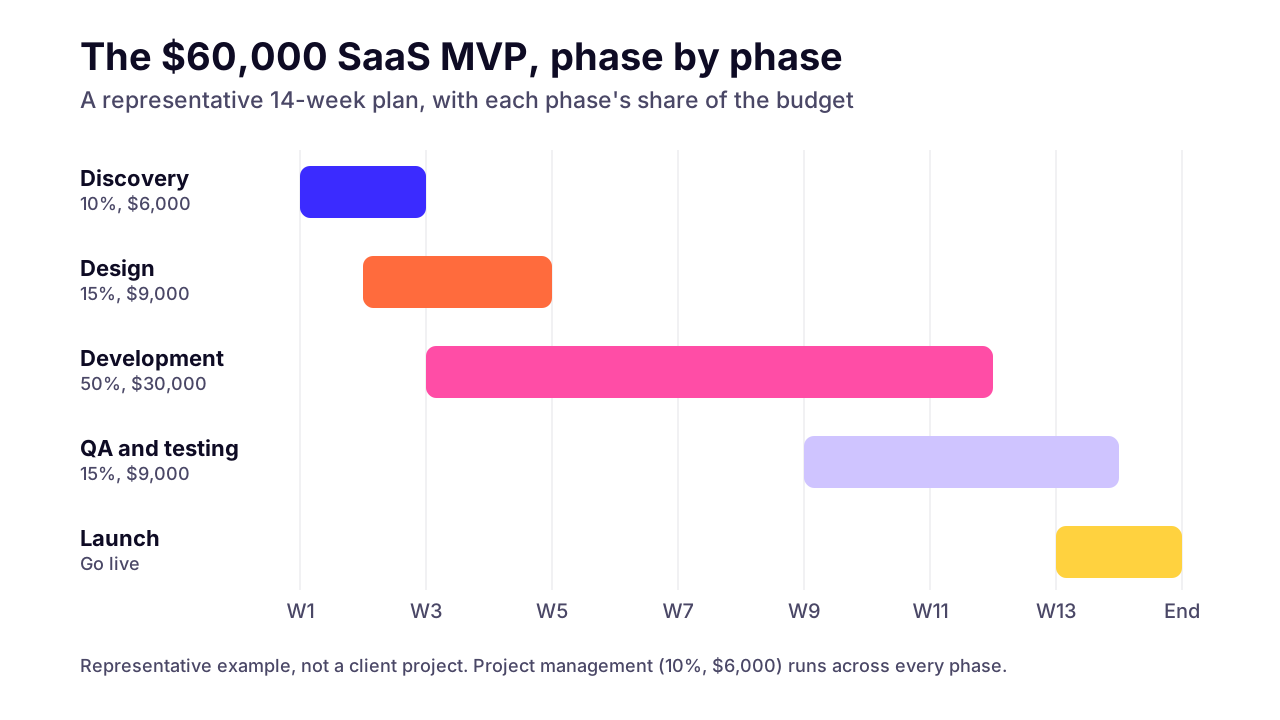
To make this concrete, here is a representative breakdown of a $60,000 SaaS MVP: a multi-tenant B2B product with accounts, a dashboard, billing and a couple of integrations, delivered in roughly 14 weeks. It's an illustrative model built on the budget split above, not a specific client project.
Discovery & architecture
- Share
- 10%
- Approx. cost
- $6,000
UX/UI design
- Share
- 15%
- Approx. cost
- $9,000
Front-end & back-end development
- Share
- 50%
- Approx. cost
- $30,000
QA & testing
- Share
- 15%
- Approx. cost
- $9,000
Project management
- Share
- 10%
- Approx. cost
- $6,000
Notice that development is exactly half the budget. The other $30,000 is what turns working code into a product people trust and pay for. A quote that puts 90% into development and almost nothing into design, QA or planning looks cheap, but it usually just moves the cost into a rebuild later.
 (opens the full-size chart in a new tab)
So, how much should you budget?
For most businesses building their first serious product in 2026, a budget of $40,000–$120,000 is realistic for a polished, launch-ready MVP or app. The exact figure comes down to scope, complexity and design. Below that range you're usually looking at a simple tool or a single-workflow MVP. Above it, a full platform or an enterprise system. Whatever your range, the same few habits keep it under control: keep the scope tight, spend properly on planning, work with a senior team, and release in phases so each stage funds the next.
At Arrowbin, we give you a fixed, transparent estimate after a short discovery call, so you know the real number before any work begins. If you want a grounded figure for your specific idea, book a free 30-minute call and we'll map your scope to a budget on the spot.
Key takeaways
- 01By Arrowbin's estimate, most custom software costs $5,000–$250,000+, and most first products land in the $40,000–$120,000 range.
- 02Cost tracks scope, technical complexity, design depth, the number of platforms, and your team's seniority and location.
- 03In our typical budget split, development is only about 50% of the cost. Discovery, design, QA and PM make up the rest.
- 04Regional rates vary 3–5x (Arrowbin estimate), but the cheapest rate rarely produces the cheapest project.
- 05As a rule of thumb, budget roughly 15–20% of the build cost per year for hosting, maintenance and ongoing ownership (Arrowbin estimate).
- 06Control cost by starting with a tightly scoped MVP and getting a fixed estimate after discovery.

Written by
Md. Shishir Ahmed
Founder, Arrowbin
Founder of Arrowbin. Writes about shipping software, what it costs, and the decisions that decide whether a product works.