The short answer
Most well-scoped MVPs take 6–14 weeks from kickoff to launch in 2026: a simple tool in 6–8 weeks, a standard MVP in 10–14, and a complex SaaS MVP in 14–20. The timeline tracks scope, clarity, integrations and how fast you make decisions. The fastest path is ruthless prioritization.
On this page
An MVP, or minimum viable product, is the smallest version of your product that delivers real value and lets you learn from actual users. Done right, it gets you to market fast and takes a lot of risk out of the bigger build, because you're working from evidence instead of guesses. The question every founder asks is simple: how long will it take? This guide gives you honest 2026 timelines and a week-by-week breakdown, looks at what speeds the schedule up or slows it down, and shows how to launch sooner without skipping the work that matters.
It's written for founders and product owners who need a realistic schedule before committing. We ship MVPs for a living, and the ranges below are Arrowbin estimates drawn from that planning and delivery work, not best-case marketing.
How long does it take to build an MVP?
A well-scoped MVP takes 6 to 14 weeks from kickoff to launch for most products. A simple, single-workflow tool can be ready in 6–8 weeks. A standard MVP with accounts, a database and a couple of integrations usually lands around 10–14 weeks. A complex, multi-tenant SaaS MVP runs 14–20 weeks. The single biggest variable is scope: how much you try to build before you launch.
Simple tool / micro-MVP
- Typical timeline
- 6–8 weeks
- Example
- Internal tool, single-flow app
Standard MVP
- Typical timeline
- 10–14 weeks
- Example
- Two-sided app, customer portal
Complex / SaaS MVP
- Typical timeline
- 14–20 weeks
- Example
- Multi-tenant B2B platform
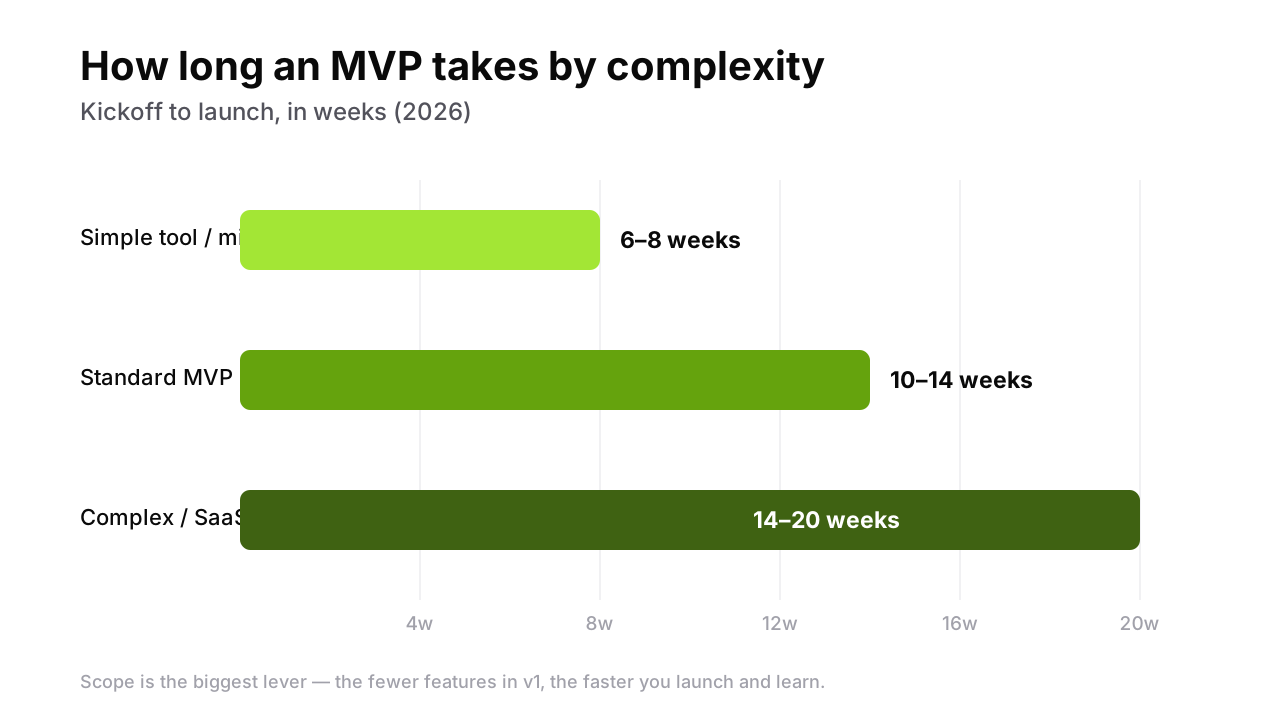 (opens the full-size chart in a new tab)
What is an MVP, and what should it include?
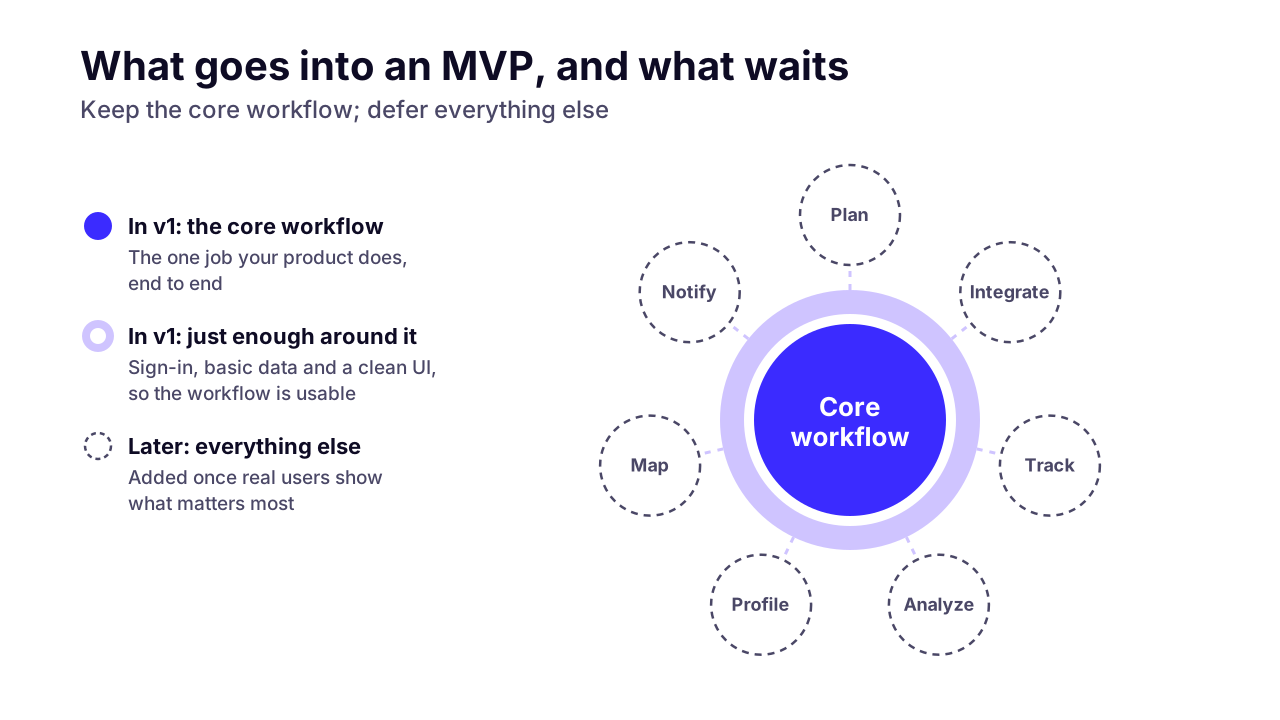
An MVP is not a half-finished product or a rough prototype. It's a complete, working product that does one core job well, enough for real users to adopt it and, ideally, pay for it. The hard part of an MVP is deciding what to leave out.
- Keep the single core workflow that delivers your main value, end to end.
- Add just enough around it to make that workflow usable, such as sign-in, basic data and a clean UI.
- Set aside secondary features, edge cases, admin nice-to-haves and the 'while we're at it' ideas.
- Defer anything you can add later without blocking the core value.
Every feature you add to v1 stretches the timeline and delays the feedback that actually tells you what to build next. The discipline to ship less is what makes an MVP fast.
 (opens the full-size chart in a new tab)
What does the MVP build look like, week by week?
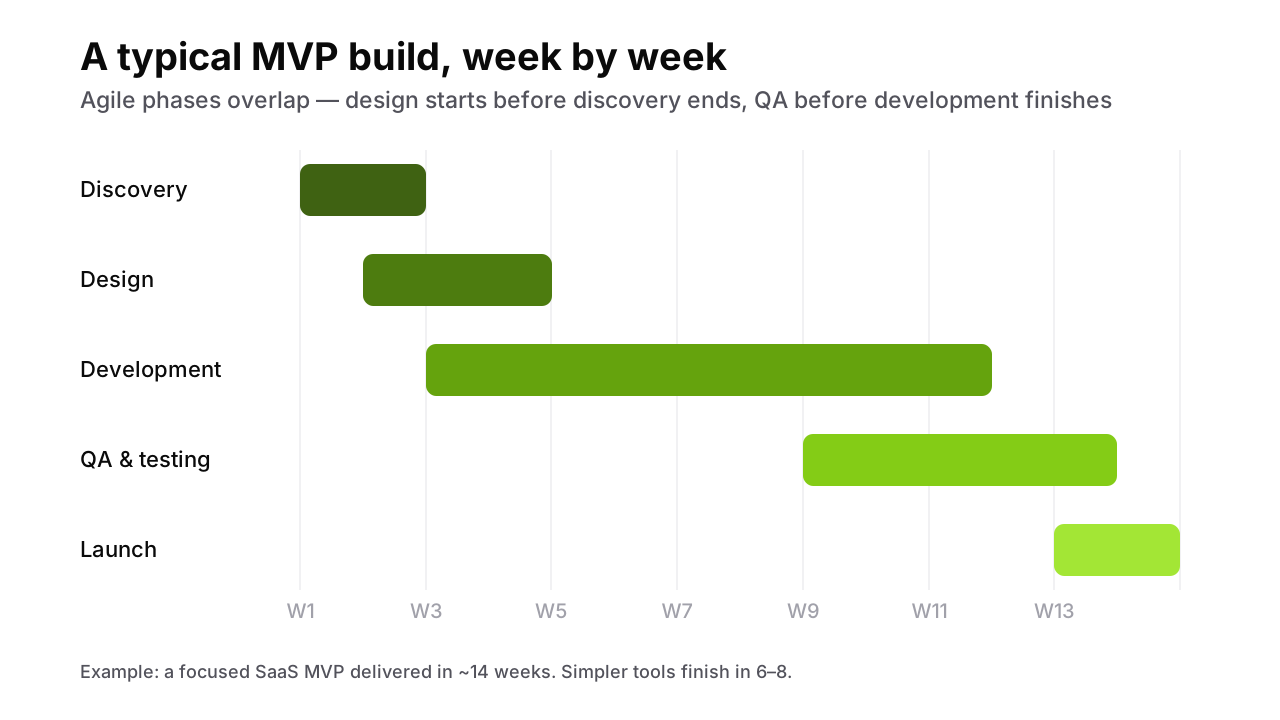
A modern MVP is built in overlapping agile phases. Design starts before discovery fully ends, and QA runs alongside development rather than after it. A typical 14-week SaaS MVP flows like this.
 (opens the full-size chart in a new tab)
Discovery & planning
- Typical duration
- 1–2 weeks
- What you get
- Locked scope, user flows, architecture
UX/UI design
- Typical duration
- 1.5–3 weeks
- What you get
- A design system and the key screens
Development
- Typical duration
- 5–9 weeks
- What you get
- The working product
QA & testing
- Typical duration
- 1–2 weeks (overlapping)
- What you get
- A stable, tested build
Launch & iterate
- Typical duration
- Ongoing
- What you get
- A live product and first real feedback
What factors affect how long an MVP takes?
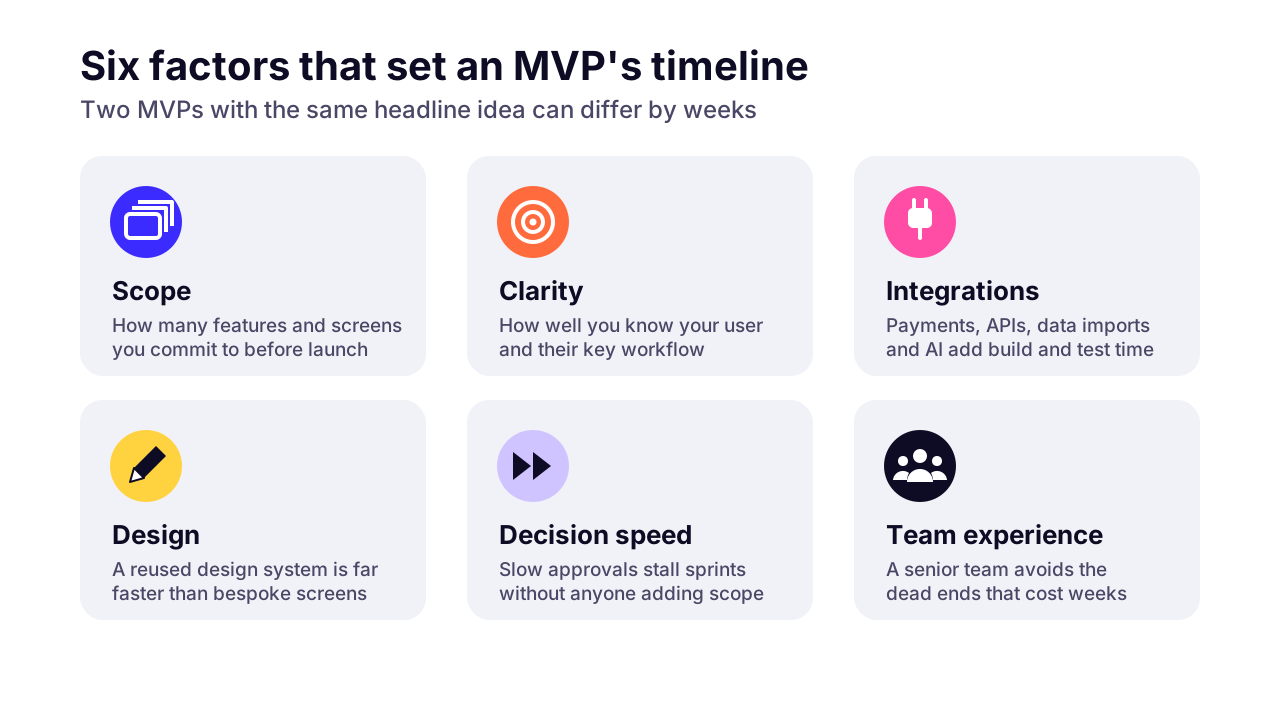
Two MVPs with the same headline idea can differ by weeks. These are the factors that move the schedule most.
Scope
The number of features and screens in v1 is the single biggest lever. The fewer you commit to before launch, the faster you ship. Platforms count as scope too: every extra platform, such as separate iOS and Android apps, adds its own build and testing time.
Clarity
How well you know your core user and their key workflow before you start decides how much rework you avoid. Vague requirements turn into change requests mid-build.
Integrations
Payments, third-party APIs, data imports and AI features all add build and testing time. A single complex integration can quietly stretch a sprint. If one of those features is an AI agent, our guide to what an AI agent adds to the budget covers its running costs as well as the build.
Design
Reusing a design system is far faster than building bespoke screens for everything. Custom UI/UX design is worth it for some products, but it costs days you should plan for.
Decision speed
Fast, clear feedback keeps momentum. Slow approvals stall sprints and are one of the most common reasons a timeline slips without anyone choosing to add scope.
Team experience
A senior team that has shipped MVPs before avoids the dead ends that cost weeks. They know which shortcuts are safe and which ones come back to bite you. If you're still picking that team, our guide on how to choose a software development company covers what to check.
 (opens the full-size chart in a new tab)
MVP vs prototype vs full product: how do timelines compare?
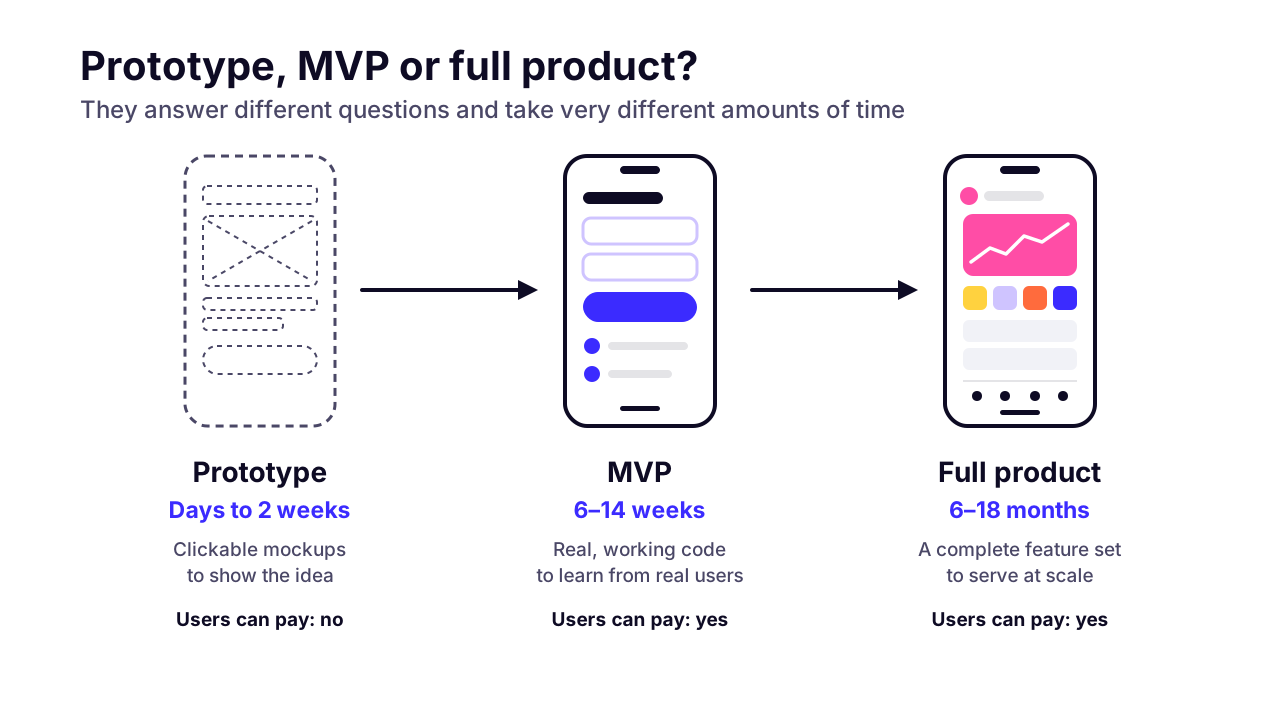
It helps to know where an MVP sits between a quick prototype and a full product. They answer different questions and take very different amounts of time. If you already have a prototype built with an AI tool, read what separates an AI-built prototype from a launch-ready MVP before you count it as weeks saved.
Goal
- Prototype
- Show the idea
- MVP
- Learn from real users
- Full product
- Serve at scale
Built with
- Prototype
- Clickable mockups
- MVP
- Real, working code
- Full product
- Complete feature set
Timeline
- Prototype
- Days–2 weeks
- MVP
- 6–14 weeks
- Full product
- 6–18 months
Can users pay?
- Prototype
- No
- MVP
- Yes
- Full product
- Yes
Best for
- Prototype
- Pitching, testing UX
- MVP
- Validating the market
- Full product
- Scaling a proven product
 (opens the full-size chart in a new tab)
What slows MVPs down, and how do you avoid it?
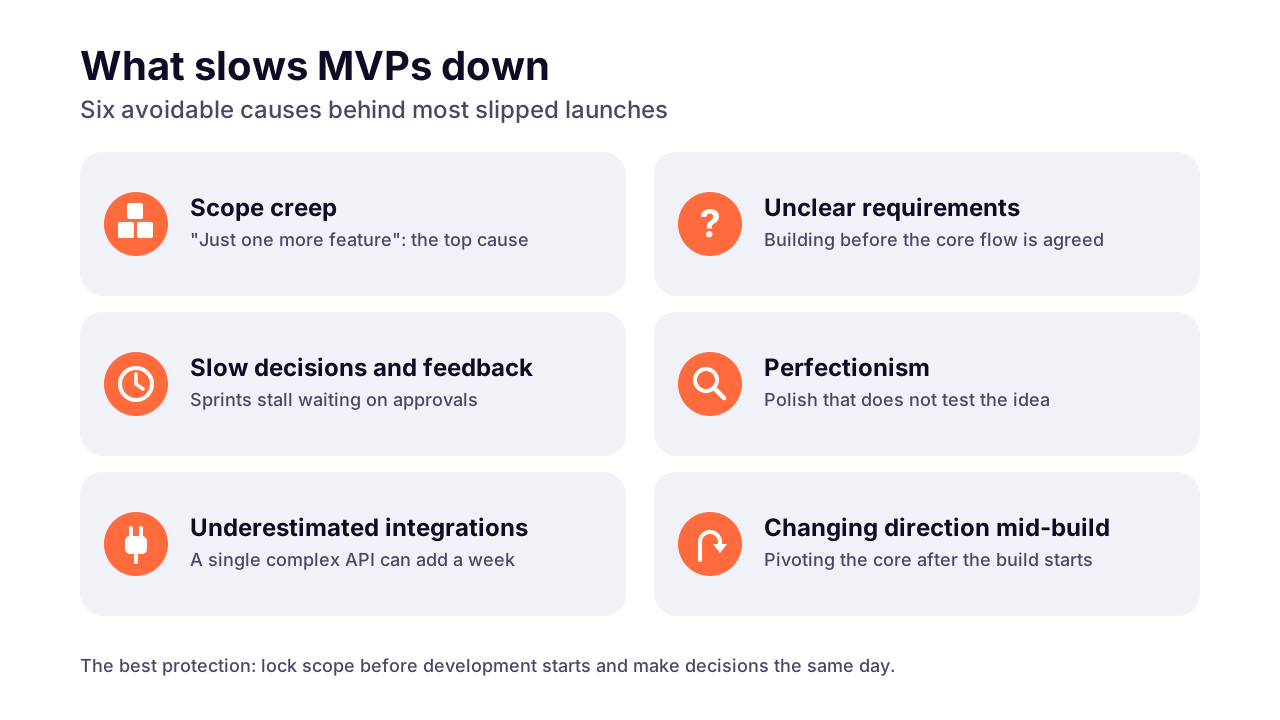
Most MVP delays come from a handful of avoidable causes. Recognizing them early keeps your launch on schedule.
- Scope creep: adding 'just one more feature' is the number-one cause of slipped timelines.
- Unclear requirements: starting to build before the core workflow is agreed.
- Slow decisions and feedback: sprints stall waiting on approvals.
- Perfectionism: polishing details that don't affect whether the idea works.
- Underestimated integrations: a single complex API can add a week.
- Changing direction mid-build: pivoting the core after development starts.
 (opens the full-size chart in a new tab)
"The fastest MVPs aren't built by working faster. They're built by building less. Ruthless prioritization beats raw speed every time."Md. Shishir Ahmed, Founder at Arrowbin
How can you launch your MVP faster?
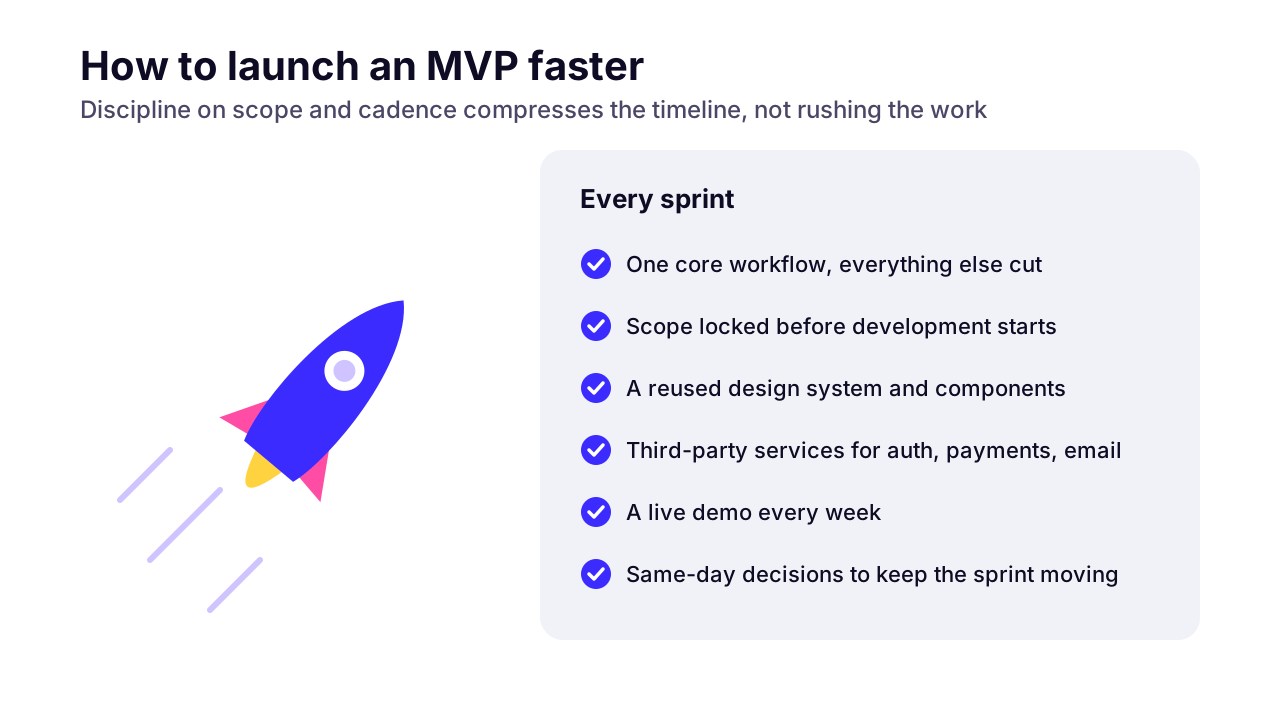
You can compress an MVP timeline without sacrificing quality. The trick is discipline about scope and process, not rushing the work.
- Define one core workflow and cut everything that isn't essential to proving it.
- Lock scope before development starts, and resist mid-build additions.
- Reuse a design system and proven components instead of designing from scratch.
- Use third-party services for non-core needs such as auth, payments and email rather than building them.
- Work in weekly sprints with a live demo, so problems surface early.
- Make decisions fast. A same-day answer keeps a sprint moving.
 (opens the full-size chart in a new tab)
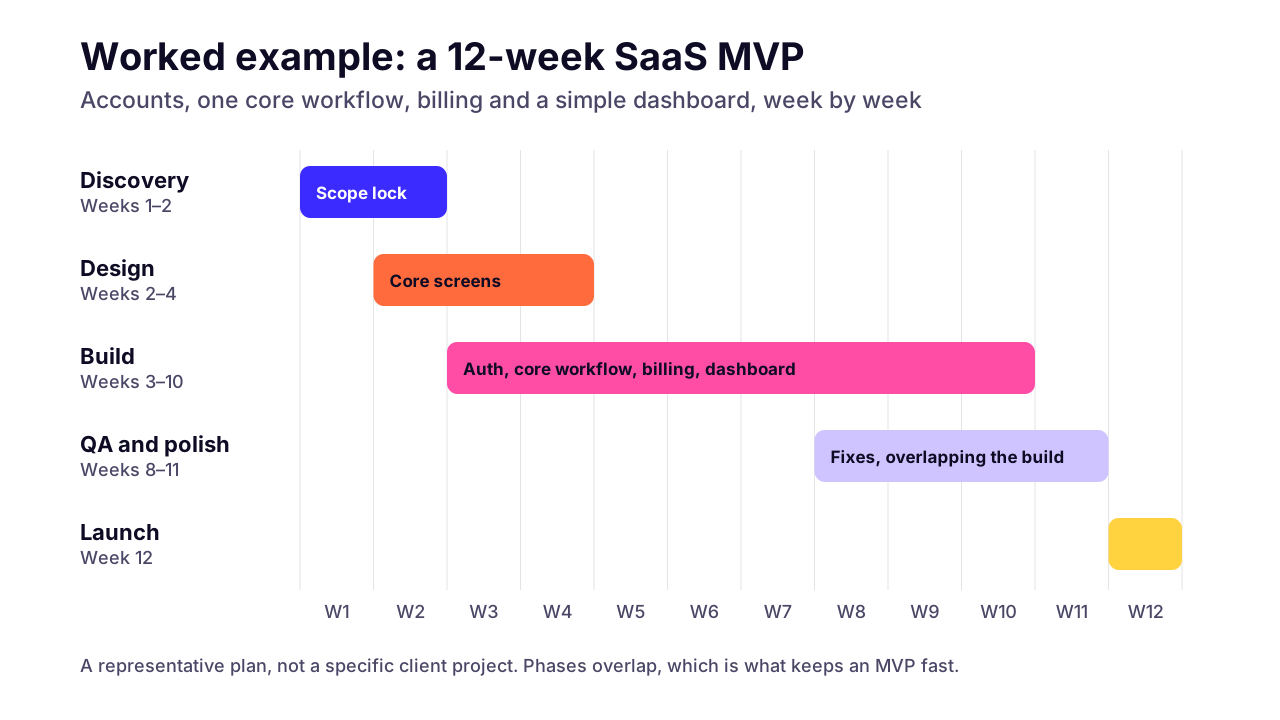
Worked example: a smaller 12-week SaaS MVP
This is a different, smaller example than the 14-week build above. The $60,000 example in our cost guide also runs about 14 weeks, but it's multi-tenant and adds a couple of integrations. This one keeps to accounts, one core workflow, billing and a simple dashboard, so it maps across 12 weeks. Both are representative plans, not specific client projects.
1–2
- Focus
- Discovery, scope lock and architecture
2–4
- Focus
- Design system and core screens
3–10
- Focus
- Build: auth, the core workflow, billing, dashboard
8–11
- Focus
- QA, fixes and polish (overlapping the build)
12
- Focus
- Launch to first users and start gathering feedback
 (opens the full-size chart in a new tab)
So, how long will yours take?
For most products, plan on 6–14 weeks to a launch-ready MVP in 2026. Expect the lower end for a focused single-workflow tool and the upper end, or a little beyond, for a multi-tenant SaaS product. The exact number comes down to scope and clarity, both of which you control. If you get the core workflow right and hold the rest for later, you'll be learning from real users far sooner than a 'build everything first' plan would allow.
Timeline is only half the planning question; the other half is budget. Our MVP budget guide turns week counts like these into dollars, and our guide on what custom software costs breaks down the ranges by project type.
If yours is a multi-tenant product, our SaaS development cost guide covers what tenancy and billing add. For the engineering side, see how we approach SaaS product engineering.
At Arrowbin, we specialize in shipping focused MVPs fast, then scaling them on the back of real feedback. If you have an idea, book a free 30-minute call and we'll map it to a realistic timeline and a fixed estimate, so you know exactly what it takes to launch.
Key takeaways
- 01Most well-scoped MVPs launch in 6–14 weeks: simple tools in 6–8, complex SaaS in 14–20.
- 02Scope is the biggest lever. The fewer features in v1, the faster you ship and learn.
- 03An MVP is a complete, working product for one core workflow, not a rough prototype.
- 04Modern MVPs overlap phases, running design, build and QA in parallel to stay fast.
- 05Scope creep, unclear requirements and slow decisions are the top causes of delay.
- 06Launch faster by locking scope, reusing components and making decisions quickly.

Written by
Md. Shishir Ahmed
Founder, Arrowbin
Founder of Arrowbin. Writes about shipping software, what it costs, and the decisions that decide whether a product works.