On this page
The product designer vs UX designer question comes down to scope. A UX designer makes a product easy and pleasant to use through research, user flows, wireframes, prototypes and usability testing. A product designer does that same work and also owns more of the "what should we build and why" side, tying design decisions to business goals and leading the effort across teams. The toolkit is the same, but the remit is wider.
Job titles blur in practice. Some companies use the two interchangeably and others split them sharply, so the label on a job post tells you less than its description does. This guide covers how the roles differ in responsibilities and skills, what each pays in the US, how a UX designer becomes a product designer, and how to choose between them, whether you are picking a career or hiring.
Arrowbin is a software studio where strategy, design and engineering sit in one senior team, so the line between these roles matters to us in practice. It decides who owns which decision when a product has to ship.
Why the difference between the two roles matters
The two titles set different expectations for scope, pay and decision-making power, so mixing them up leads to mismatched hires and stalled careers. Understanding the product designer vs UX designer split saves you from both.
What a mismatch costs
Job seekers feel it first. Apply for a product designer role expecting hands-on screen work and you may spend your weeks in roadmap debates with product managers and stakeholders. Take a UX designer role hoping to shape strategy and you may find that the strategy is set before you arrive.
Hiring teams pay too. A team with a confusing checkout flow needs someone who can research, test and redesign it, which is core UX work. A team with no clear roadmap and no product manager needs someone who can decide what is worth building at all, and a screen-level specialist will struggle there.
Choose the role by the decisions it owns, not by the label on the job post.
Why the titles are so blurry
Product design historically meant physical goods such as furniture, electronics and mugs, a field also called industrial design. In recent years the term has moved to software, and roles once titled web designer or UX/UI designer now often carry the product designer label.
Companies also use the titles differently. At a ten-person startup, a UX designer may do research, visuals and product decisions alone. At a large company, a product designer may spend most days on interaction details inside one narrow area. So read the job description instead of the title, and ask in interviews who owns the roadmap.
How the two roles differ in responsibilities and skills
A UX designer owns how a product works for the person using it. A product designer owns that too, plus whether the product is the right thing to build. In short, the UX designer vs product designer gap is depth of craft versus breadth of ownership.
Responsibilities side by side
| Area | UX designer | Product designer |
|---|---|---|
| Main focus | Usability, satisfaction, ease of use | The whole product, from concept to launch and after |
| Core question | Can people use this easily? | Are we building the right thing, and does it work? |
| Typical work | User research, personas, user flows, wireframes, prototypes, usability tests | Market and user research, competitive analysis, prototypes, workshops, analytics review |
| Closest partners | Researchers, visual designers, developers | Product managers, engineers, marketers |
| Business involvement | Moderate | High, balancing user needs, business goals and technical limits |
| Leadership | Grows with seniority | Often expected to lead projects or teams |
Both roles build on research and iteration. The difference is where the hands-on craft ends and the cross-team ownership begins. A UX designer usually goes deeper into interface mechanics, while a product designer often captains the whole effort and pulls researchers, visual designers and business stakeholders together.
Shared skills and where they split
Figma, wireframing, prototyping and user-centered thinking sit in both skill sets, along with collaboration. That shared foundation is why moving between the roles is realistic, and neither role needs to code, though knowing how developers work helps you talk to them.
- UX specialist strengths: usability testing, interaction design, information architecture, user research.
- Product designer extras: product thinking, business acumen, project management, prioritizing under constraints.
Product thinking is the clearest divider. In a double-diamond process, the first half is choosing the right things to build and the second half is building them right. UX and UI work live mostly in the second half, while product thinking lives in the first.
UX designers build the thing right, and product designers also decide it is the right thing to build.
Where UI designers and product managers fit
UI designers focus on visual craft: layout, typography, color and polish. Many UX roles include UI work, which is why job posts say "UI/UX". Neither UI/UX nor product design is better. They suit different strengths.
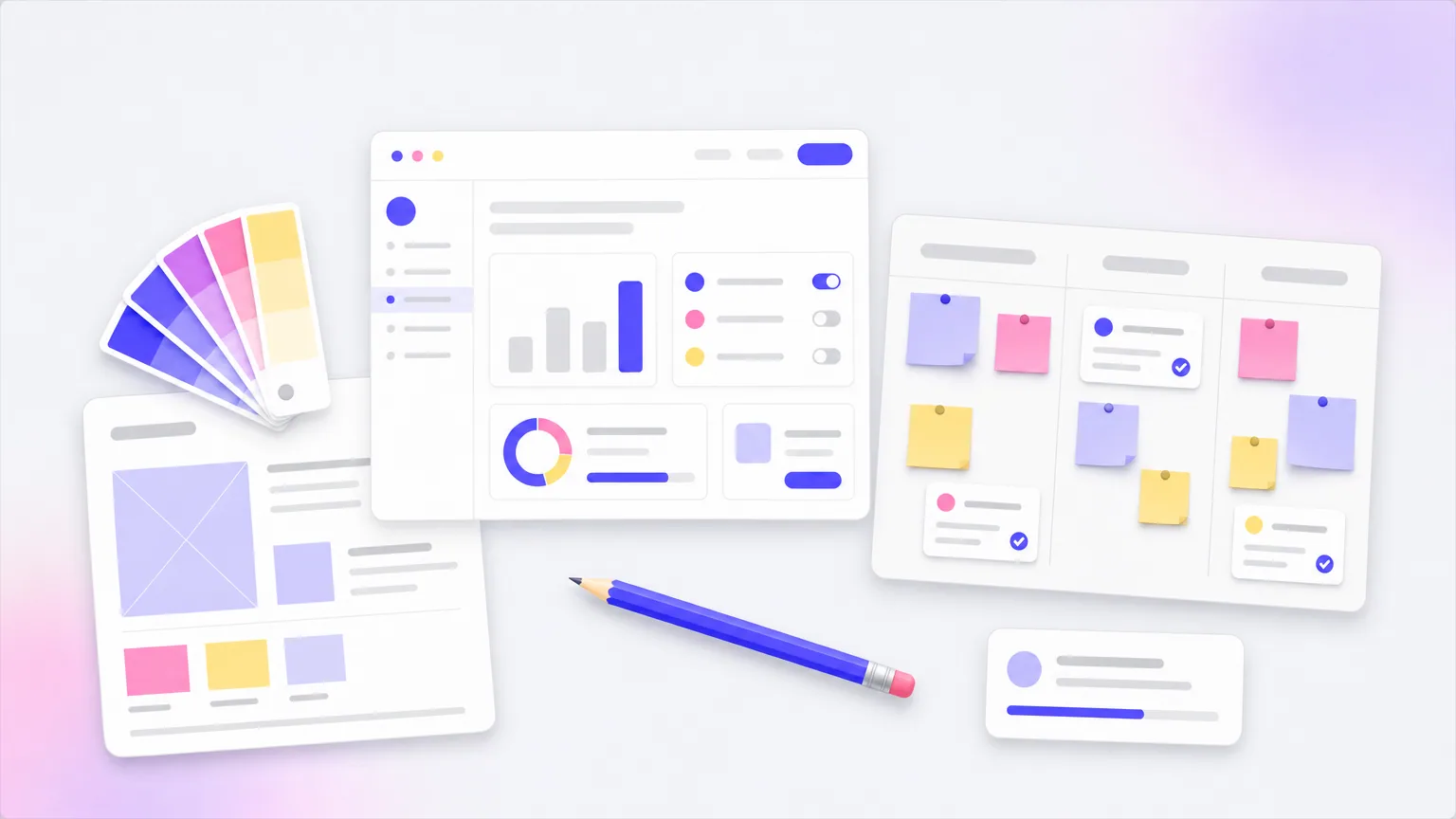
A product manager owns priorities, the roadmap and the business case. A product designer works beside them and often shares discovery work, which is why product design leads naturally into product management. The manager decides what gets prioritized, and the designer shapes the solution.
Product designer vs UX designer salary and career paths
Product designers earn more on average in the US, by roughly 11% to 22% depending on the salary source. Career paths diverge too: UX designers tend to deepen into a specialty, while product designers tend to move toward leadership or strategy.
What each role earns
| Source (US average base pay, 2026) | UX designer | Product designer | Gap |
|---|---|---|---|
| Glassdoor | $84,000 | $93,000 | $9,000 (11%) |
| Indeed | $119,034 | $144,982 | $25,948 (22%) |
| Payscale | $83,486 | $96,572 | $13,086 (16%) |
These aggregators measure differently, so compare the gap within a row instead of numbers across columns. Take a UX designer at $84,000 on the Glassdoor scale. Moving to product design at that source's average means about $93,000, an extra $9,000 a year.
Other published ranges put UX designers at $80,000 to $120,000 and product designers at $100,000 to $140,000, with senior roles passing $150,000 in top markets. Treat all of these as averages, and check current listings for your seniority and company type.
Expect a premium of roughly 11% to 22% for product design, but seniority and company type move your pay more than the title does.
Where each career path leads
A UX designer can grow into a UX researcher, interaction designer or UX manager, or specialize in areas like accessibility and information architecture. A product designer can grow into a design lead, head of product or product manager, because the role already touches strategy and cross-functional work.
Sideways moves can pay well. On Glassdoor, average base pay is $94,000 for UX researchers and $108,000 for product managers, against $93,000 for product designers. Pick the direction you want to work in daily, then compare pay.
How to move from UX designer to product designer
Yes, a UX designer can become a product designer, and it is a natural step. You do not swap skills so much as widen your scope and prove you can own outcomes, not just screens.
Five steps to widen your scope
Most hiring managers look for evidence of project leadership and business awareness, so build both on purpose.
- Learn how the business makes money. Study the revenue model, the key metrics and the current roadmap, and tie each design decision to one of them.
- Own a feature end to end. Volunteer to run a feature from problem definition to launch, including scoping, trade-offs and post-launch review.
- Join prioritization. Sit in on planning with product managers and engineers, and learn to weigh effort against impact.
- Back decisions with data. Combine analytics with usability testing so you can argue for a design with evidence.
- Rewrite your portfolio. Show why you chose the problem, which options you rejected and what changed after launch, not only the final screens.
The jump from UX to product design is proof that you can own outcomes, not a new set of tools.
Going the other way, and starting out
A product designer can move back toward UX by specializing in research, interaction design or accessibility. That path suits people who miss the craft and want depth over breadth, and it is common.
If you are just starting, begin with UX fundamentals: research methods, user flows, wireframes, prototyping and Figma. Those skills carry into both roles, and you can add leadership and business experience as you gain responsibility.
How to choose the right role for your career or team
Choose UX design if you want depth in user behavior and interface craft. Choose product design if you want to shape what gets built and are comfortable with business trade-offs.
Choosing for your career
Ask yourself which of these sounds more like your ideal week.
- UX design fits if you enjoy interviews, usability tests, flows and fine interaction details, and you want to go deep.
- Product design fits if you like workshops, prioritization, working with product managers and engineers, and owning results.
Neither choice locks you in. Because the skills overlap, you can switch as your interests change.
Choosing for your team
An early-stage team with one designer and no product manager usually needs a product designer, someone who can research, decide and design. A mature product with a roadmap owner and complex flows often benefits more from a UX specialist who improves usability in depth.
If you do not want to hire in-house yet, a studio can cover the gap. Arrowbin's UI/UX design service typically runs 4 to 8 weeks from research to dev-ready designs. It delivers user flows, wireframes, a clickable prototype, final screens and a Figma design system, all owned by you.
Picking the right designer
A UX designer perfects how a product feels to use. A product designer does that work and also decides, with the business, what deserves to be built. Pay, career paths and daily work follow from that scope, so read what a role owns before you trust its title.
If you are building a product and want design that connects to the engineering that follows, book a free 30-minute call with Arrowbin. A senior engineer will talk you through scope, timeline and cost.