On this page
The best custom software development company for you is the one whose size, industry experience and pricing model fit your project, not the one with the biggest headcount. Startups and growing businesses that want senior engineers and a fixed estimate suit Arrowbin. Buyers who need a large global bench suit Itransition. FinTech, ticketing and media teams should look at Softjourn. Large enterprises with strict compliance rules should look at Luxoft.
Most vendor pages promise "end-to-end" delivery, and few make it easy to compare one vendor with another. You end up with ten tabs open and no clear shortlist. This article gives you four vendors, what each says it does best, who each one fits, and what to verify before you sign.
Arrowbin is our company, so it is listed first and held to the same format as the others, including its limits. The other three are described only by how they present themselves publicly. Confirm every claim in a call before you commit.
1. Arrowbin
What it builds and how it works
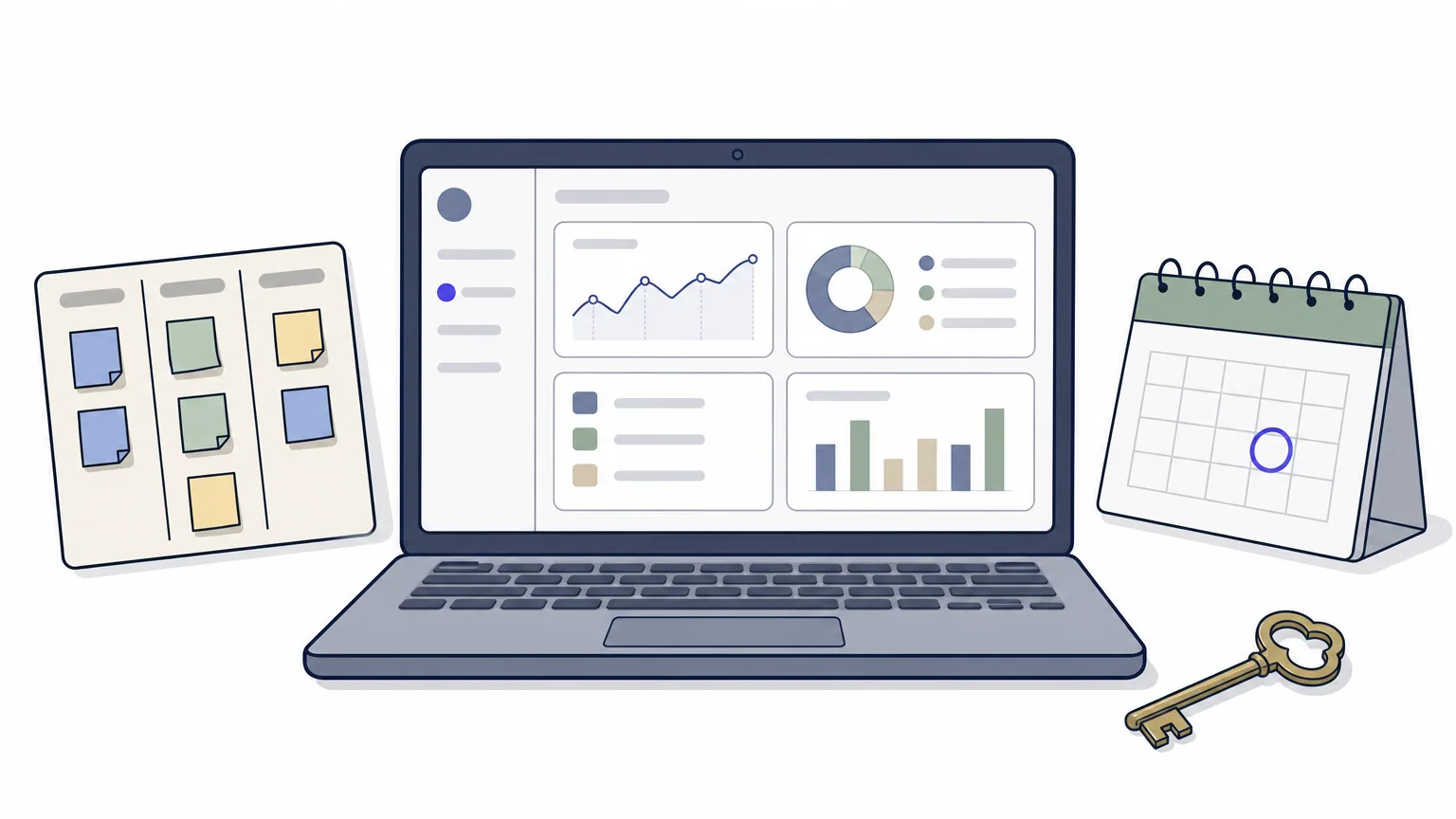
Arrowbin is a founder-led software studio, building since 2020, that handles strategy, design, engineering, cloud and support in one senior team. Its custom software service covers web platforms, internal and admin tools, workflow automation, API integrations, legacy modernization and B2B portals. The stack is TypeScript, React, Next.js, Node.js, Python, PostgreSQL and AWS.
- Free 30-minute call, then a fixed, itemised estimate
- Two-week sprints with a working-software demo every Friday
- Usable first version in 6 to 12 weeks
- 100% source code ownership and no per-seat license fees
Who it suits and what to verify
Arrowbin suits founders and owners of startups and growing companies that have outgrown off-the-shelf tools and want to talk directly to the engineers. Pricing runs from $8,000 for a focused tool to $75,000+ for a full platform. Scope, integrations and the complexity of the logic drive the number. A single internal dashboard sits near the low end, and a multi-role platform with integrations sits near the top.
Check two things. Its portfolio of seven live projects leans toward e-commerce and corporate sites for Bangladeshi brands, so ask for references close to your industry. It serves clients worldwide, and US buyers should agree overlap hours at kick-off.
Arrowbin fits buyers who value a fixed estimate and full code ownership over a large vendor's bench.
2. Itransition
What it builds and how it works
Itransition presents itself as a global custom software development company with 25+ years of experience and 3000+ IT professionals. It offers a broad software development services range rather than one specialty.
- Large global bench
- Broad service range
- Long operating history
Who it suits and what to verify
Itransition suits complex programs that need many specialists at once, such as several workstreams running in parallel. Its scale is the main draw. The trade-off is that large vendors often put account and delivery layers between you and the engineers, so ask exactly who will work on your project and for how long.
Pricing is set per project. Ask for a fixed or capped estimate with the scope written out, so a growing team does not quietly grow your bill.
Choose a very large vendor for coordination across many workstreams, and make it name the people on your project.
3. Softjourn
What it builds and how it works

Softjourn describes end-to-end custom development for FinTech, ticketing and media companies. It promises dedicated teams, a transparent process and code you own.
- Sector focus: FinTech, ticketing, media
- Dedicated team model
- Code ownership stated up front
Who it suits and what to verify
Softjourn suits companies in those three sectors that want a team working only on their product. Domain experience can save weeks of explaining how payments, ticketing or media workflows behave. Outside those sectors, that advantage mostly disappears.
Before signing, ask how the dedicated team is billed month to month. Confirm in the contract that the code ownership it advertises covers repositories, cloud accounts and documentation. Ask which regulations the team has worked under, if yours applies.
A sector specialist pays off only when your product actually lives in that sector.
4. Luxoft
What it builds and how it works
Luxoft focuses on enterprise-grade bespoke solutions for Fortune 500 companies. It says it designs and implements them with security, compliance and user experience in mind.
- Enterprise and Fortune 500 focus
- Security and compliance emphasis
- Design and implementation under one roof
Who it suits and what to verify
Luxoft suits large organizations with formal procurement, security reviews and compliance duties. If your legal team will send a long vendor questionnaire, an enterprise-oriented firm is built for that process. A startup budget will likely not fit that model.
Ask about minimum engagement size and whether smaller projects are accepted. Ask how teams are staffed over a multi-year program, and how quickly a first working version reaches users.
Enterprise-focused vendors reduce compliance risk but rarely reduce cost or time to first release.
How to compare and choose a vendor
A custom software development agency builds software around your own workflows, data and users instead of asking you to adapt to a packaged tool. Comparing four vendors comes down to team model, cost logic and contract terms.
How the four picks compare
| Company | Focus | Team model | Best for |
|---|---|---|---|
| Arrowbin | Startups and growing businesses | One senior team, fixed estimate | Fast first launch with full ownership |
| Itransition | Broad software services | Large global bench (3000+ IT professionals) | Complex multi-team programs |
| Softjourn | FinTech, ticketing, media | Dedicated teams | Sector-specific products |
| Luxoft | Fortune 500 enterprises | Enterprise programs | Compliance-heavy organizations |
What custom software costs
No single average holds, because price follows scope, integrations and logic complexity. Arrowbin's published range, $8,000 to $75,000+, shows how wide the spread is within one vendor. Compare quotes only when every vendor prices the same written scope. The old 40/20/40 rule of thumb splits effort into 40% analysis and design, 20% coding and 40% testing. If a quote treats coding as nearly everything, ask where testing sits.
Checks before you sign
- Confirm in writing that you own the source code, designs and cloud accounts.
- Ask whether the estimate is fixed or time-and-materials.
- Ask who exactly will work on your project, and speak to them.
- For US teams, agree overlap hours and an update rhythm.
- Ask for references from projects like yours.
- Ask what support looks like after launch.
Compare vendors on who builds, who owns the code and how the price is fixed, before you compare anything else.
Pick the vendor, then test the fit
The right shortlist has two or three vendors that match your size, sector and budget model. Arrowbin fits startups and growing companies that want senior engineers, a fixed estimate and full ownership. Itransition, Softjourn and Luxoft cover larger programs, specific sectors and enterprise compliance. Run the checks above on each, and the choice usually becomes clear within a week of calls.
If you want a straight answer on scope, timeline and cost from a senior engineer, book a free 30-minute call with Arrowbin. You get a clear scope and a fixed estimate before any work begins, with no obligation.